
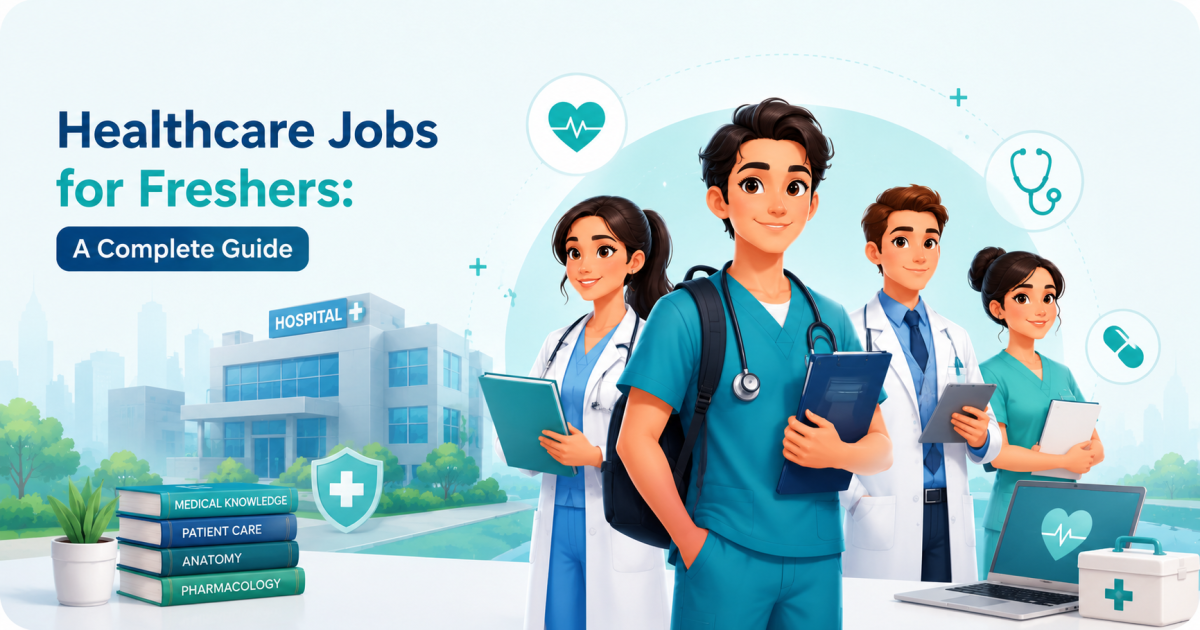
India’s healthcare sector is expanding fast, and freshers are riding that wave.
The country’s healthcare workforce has already crossed 6 million professionals, with over 6.3 million additional jobs expected by 2030, according to IBEF (India Brand Equity Foundation)
That kind of growth means the sector isn’t just stable; it’s actively creating room for new talent right now. For freshers, this translates into real opportunities across hospitals, clinics, diagnostic centres, and healthcare-tech companies, well beyond the traditional doctor-or-nurse path.
Whether your interest lies in clinical roles, hospital administration, medical coding, or emerging healthcare-tech positions, this guide walks you through everything you need to know, from eligibility and skills to job search strategies and interview tips, to land your first job in the sector.
Why Consider Healthcare Jobs as a Fresher
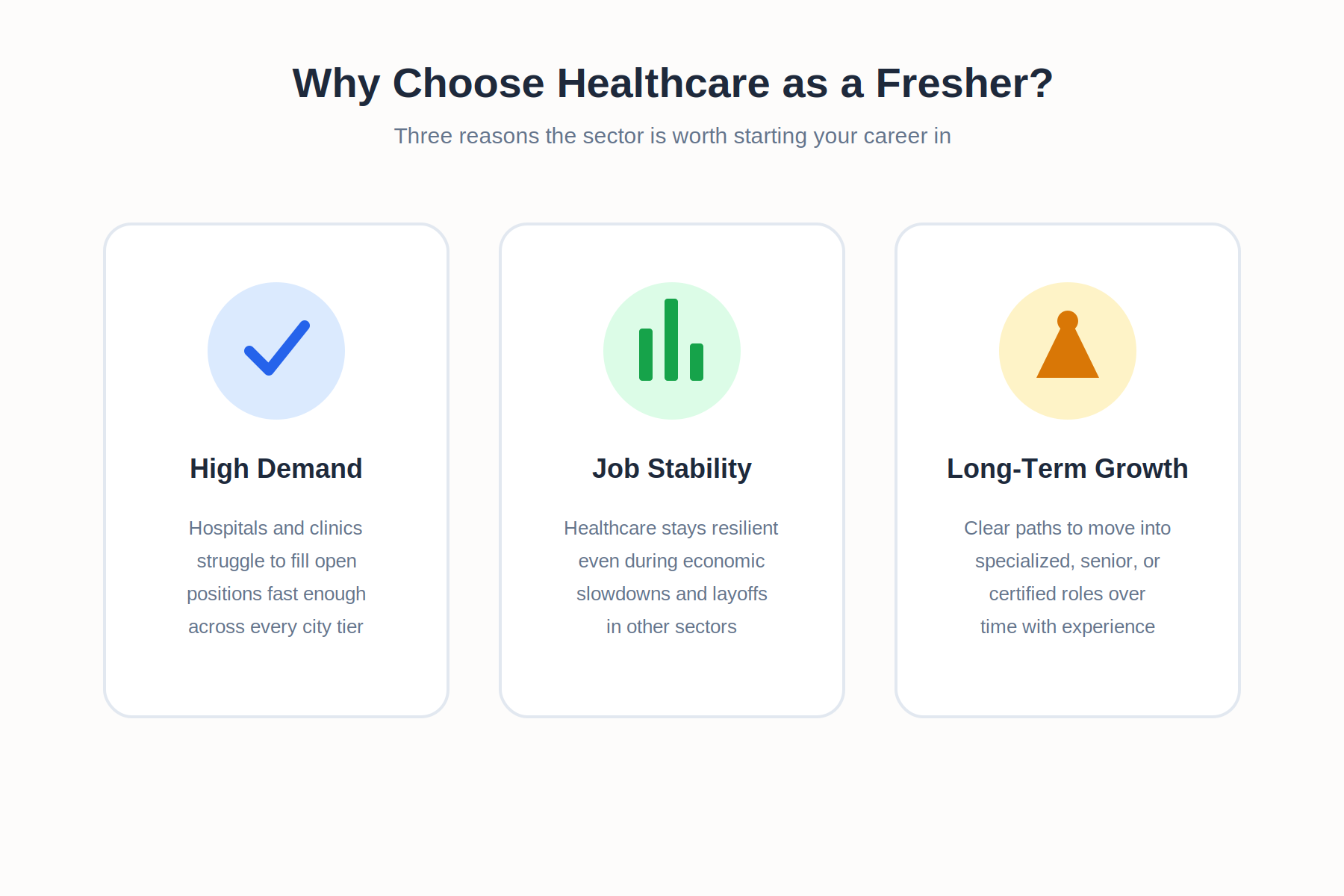
Healthcare jobs for freshers offer something rare: genuine job security paired with real growth potential. With hospitals, clinics, and healthcare-tech firms hiring steadily, it’s a sector worth exploring early in your career.
-
Growing Demand for Healthcare Professionals
Hospitals and clinics across India are struggling to fill open positions fast enough, especially in nursing, lab work, and hospital administration.
This demand isn’t limited to metro cities either; tier-2 and tier-3 towns are seeing hiring surges too.
For freshers, that means more entry points, faster interview cycles, and less competition than in oversaturated sectors like IT.
-
Career Stability and Long-Term Growth
Unlike industries that see frequent layoffs during economic slowdowns, healthcare tends to stay resilient because people always need medical care.
Starting as a fresher also opens doors to long-term growth; many roles offer clear paths toward specialisation, certifications, or senior positions. It’s a career where consistent effort early on often pays off steadily over time.
Types of Healthcare Jobs for Freshers
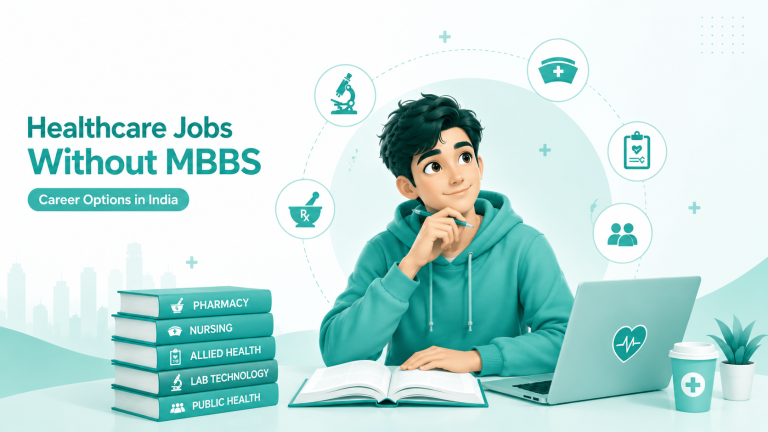
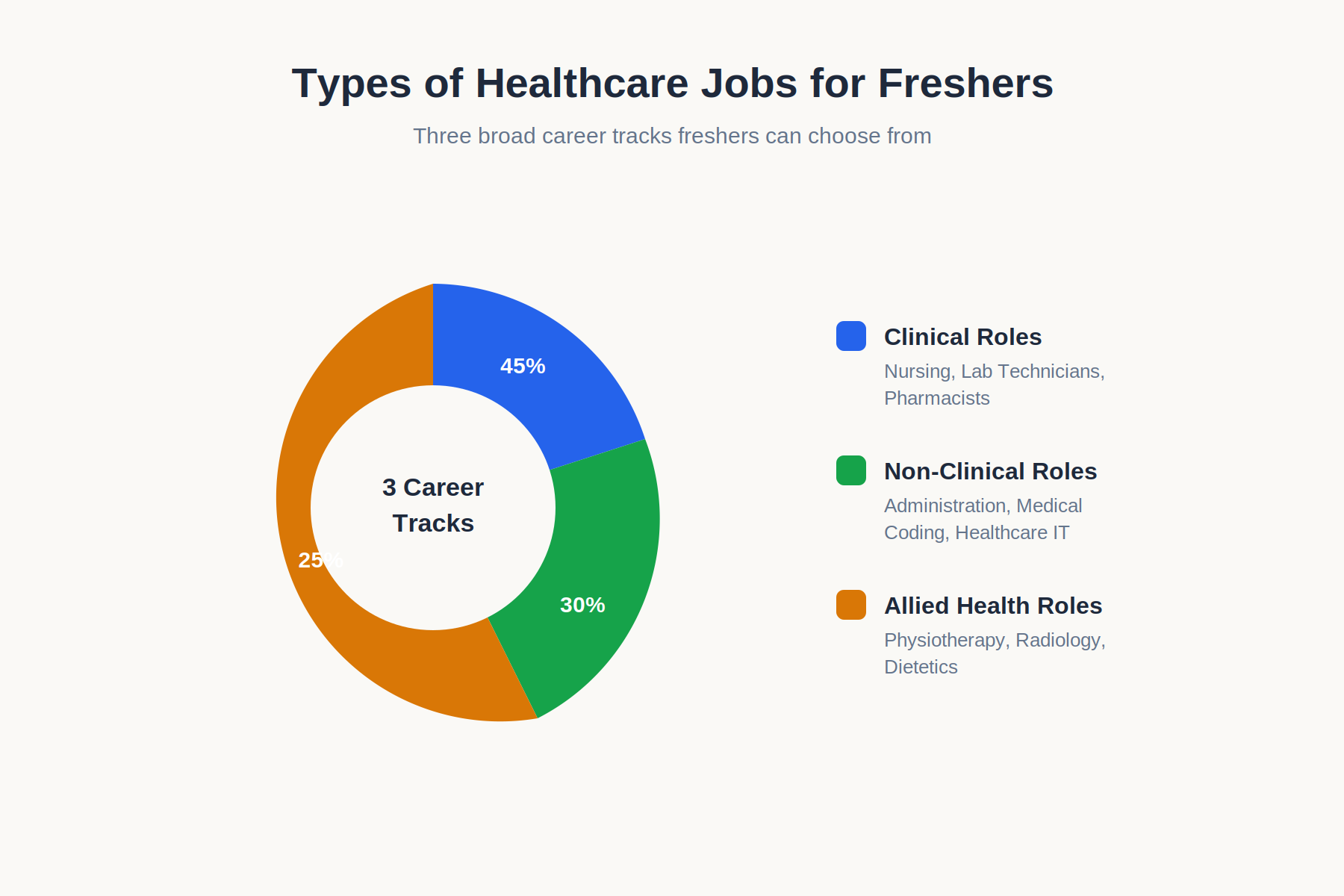
Healthcare careers aren’t limited to doctors and nurses. Freshers today have access to clinical, non-clinical, and allied health roles across hospitals, diagnostic centres, insurance firms, and health-tech companies.
1. Clinical Roles (Nursing, Lab Technicians, Pharmacists)
These roles involve direct patient care and typically require a diploma or degree in a medical field.
- Staff Nurse – Assists doctors, monitors patients, administers medication
- Lab Technician – Conducts diagnostic tests, handles samples, maintains lab equipment
- Pharmacist – Dispenses medication, advises patients, manages pharmacy inventory
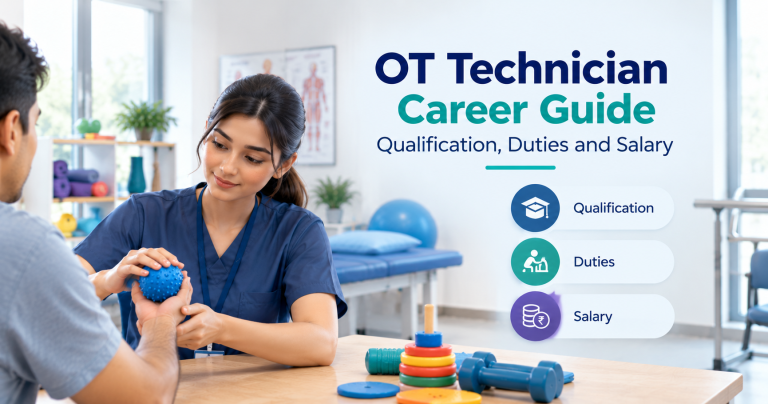
- OT Technician – Assists surgeons during operations, sterilises equipment
- Requires: GNM/B.Sc Nursing, DMLT, B.Pharm, or equivalent certification
- Work settings: hospitals, nursing homes, diagnostic labs, pharmacies
2. Non-Clinical Roles (Administration, Medical Coding, Healthcare IT)
These roles keep healthcare facilities running without direct patient contact, ideal for freshers from commerce, IT, or general backgrounds.
- Hospital Administrator – Manages daily operations, staffing, and compliance
- Medical Coder – Converts diagnoses and procedures into standardised billing codes
- Medical Biller – Handles insurance claims and payment processing
- Healthcare IT Support – Maintains electronic health record (EHR) systems and hospital software
- Requires: BBA, B.Com, MBA (Healthcare), or coding certifications (CPC, CCS)
- Work settings: hospital admin offices, insurance companies, health-tech firms, BPOs
3. Allied Health Roles (Physiotherapy, Radiology, Dietetics)
Allied health professionals support treatment and recovery alongside doctors, usually in specialised, certification-driven fields.
- Physiotherapist – Helps patients recover mobility after injury or surgery
- Radiographer – Operates imaging equipment like X-ray, CT, and MRI machines
- Dietitian/Nutritionist – Creates diet plans for patients based on medical needs
- Occupational Therapist – Helps patients regain daily-living skills after illness or injury
- Requires: BPT, B.Sc Radiology, B.Sc Nutrition, or related diploma
- Work settings: hospitals, rehabilitation centres, wellness clinics, diagnostic imaging centres
How to Find Healthcare Jobs for Freshers
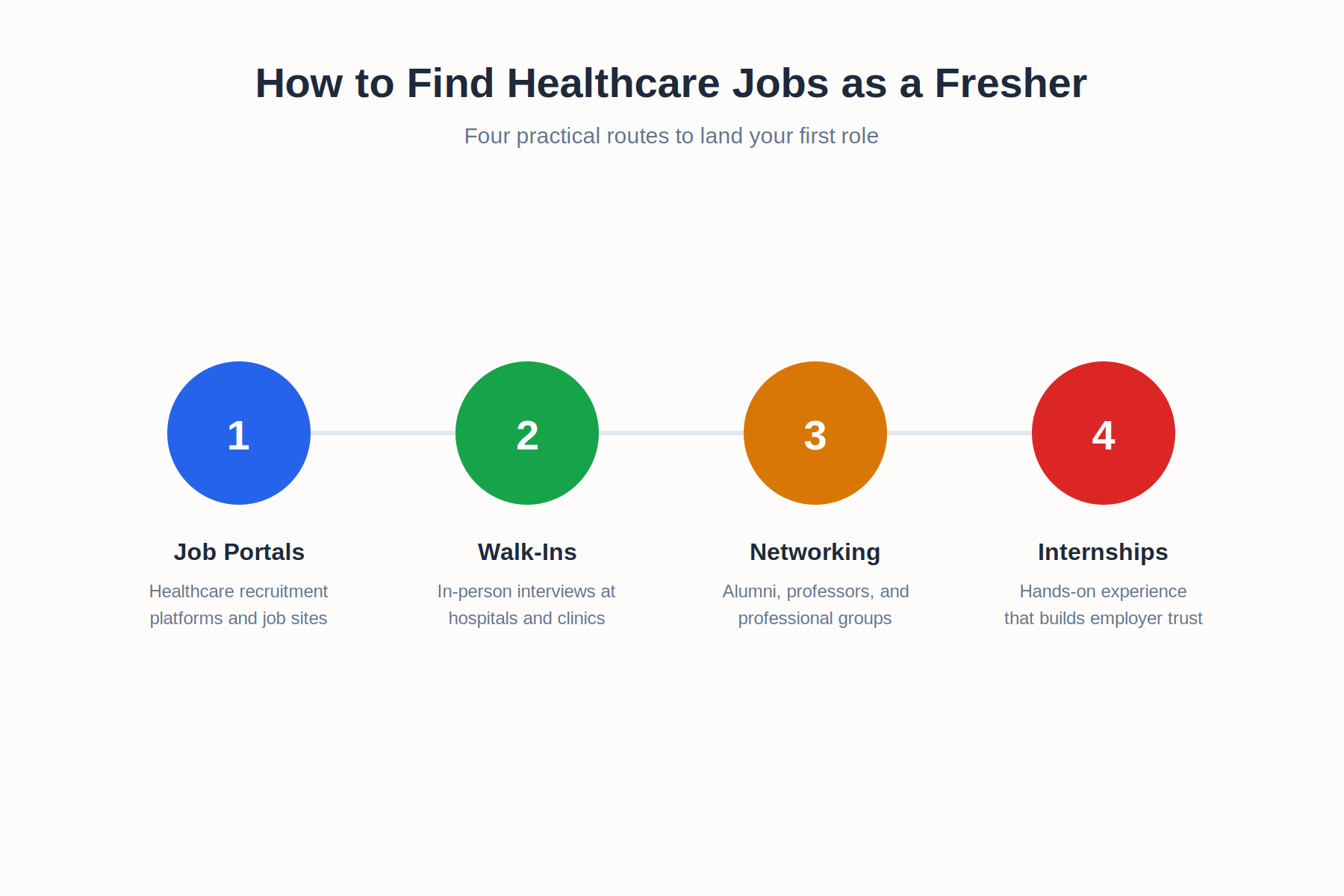
Landing your first healthcare job comes down to knowing where to look. From online portals to walk-ins, networking, and internships, freshers have several practical routes to explore.
1. Job Portals and Healthcare Recruitment Platforms
Online job portals and healthcare-specific recruitment platforms are often the fastest way to find fresher openings. These platforms let you filter by location, role, and experience level, making it easier to spot entry-level positions.
Many also allow you to set job alerts, upload your resume, and apply directly, saving time compared to reaching out to employers individually.
2. Hospital and Clinic Walk-Ins
Many hospitals and clinics, especially smaller or local ones, still hire through walk-in interviews rather than posting online. Visiting HR departments in person with your resume and certificates can help you get noticed faster, particularly for nursing, lab, or support staff roles.
This approach works well in cities where healthcare facilities prefer meeting candidates directly before hiring.
3. Networking
Building connections within the healthcare field, through professors, alumni, seniors, or professional groups, often leads to job leads that never get advertised publicly. Attending healthcare seminars, workshops, or alumni meetups can help freshers meet people already working in the industry.
For many freshers, a referral from someone within the field carries more weight than a cold application.
4. Internships
Completing an internship or clinical rotation during or right after your studies builds practical, hands-on experience that employers value highly.
It also puts you directly on a hospital or clinic’s radar; many facilities prefer hiring interns they’ve already trained over unfamiliar candidates. Even short-term internships can strengthen your resume and improve your chances of a full-time offer.
Conclusion
Finding Healthcare jobs for freshers doesn’t have to be overwhelming. With demand for professionals rising across clinical, non-clinical, and allied health roles, there’s more room than ever for newcomers to break in.
The key is knowing your options, whether that’s nursing, medical coding, physiotherapy, or hospital administration, and pursuing the right mix of qualifications, certifications, and hands-on experience through internships.
From there, using job portals, walk-ins, and networking together gives you the best shot at landing your first role. With the right preparation and a bit of persistence, your first healthcare job is well within reach.
Ready to start your search? Explore the latest healthcare job openings on Staffton Health and take the first step toward your career in healthcare today.
Contact Us for more details.
FAQs
1. What qualifications do I need for an entry-level healthcare job?
Requirements vary by role. Clinical positions like nursing or lab technician roles usually need a diploma or degree (GNM, B.Sc Nursing, DMLT), while non-clinical roles like administration or medical coding may only require a graduate degree plus relevant certification.
2. Can I get a healthcare job as a fresher without work experience?
Yes. Many healthcare employers hire freshers directly, especially for nursing, lab support, and administrative roles. Internships, clinical rotations, and certifications can strengthen your application even without prior job experience.
3. Which healthcare jobs for freshers are best for someone with a non-medical background?
Roles like medical coding, medical billing, hospital administration, and healthcare IT support are good options for freshers with a commerce, IT, or general degree background; no clinical qualification is required.
4. How long does it take to get hired as a fresher?
This depends on the role and hiring method. Walk-in interviews at hospitals can lead to faster offers, while portal applications may take a few weeks. Building a strong resume and preparing well for interviews can speed up the process.
5. Is healthcare a stable career choice for freshers?
Yes. Healthcare is considered one of the more recession-resistant sectors since demand for medical services remains constant. This makes it a reliable long-term career path with opportunities for growth and specialisation over time.