
Walking into a hospital for a job interview can feel very different from interviewing for a typical office role.
Healthcare employers are assessing more than your qualifications. They also want to understand how you communicate, handle pressure, work with a team, and approach patient care. The healthcare sector continues to be a major source of employment.
India had 1,092.79 million internet subscribers by March 2026, up 6.24% from 1,028.61 million in December 2025.
For candidates, this means preparation should go beyond memorizing common interview answers. Whether you are a nurse, doctor, pharmacist, technician, therapist, or another healthcare professional, you need to understand the hospital, review the job description, prepare for role-specific questions, and keep your documents ready.
These Interview tips for hospital jobs will help you prepare for different stages of the hiring process, answer questions with greater confidence, and demonstrate the skills and professional attitude hospitals expect from their employees.
Understand the Role and the Hospital Before You Walk In
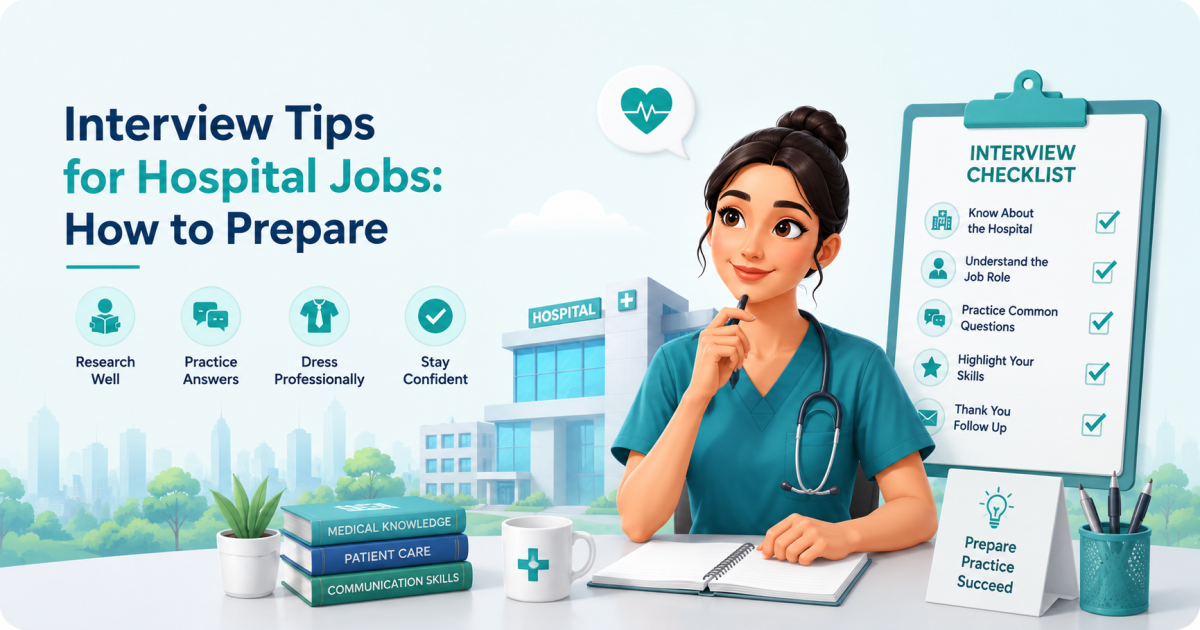
Before preparing answers, take some time to understand the hospital and the position you are applying for. This is one of the most useful Interview tips for hospital jobs because it helps you give relevant answers instead of relying on general interview responses. Knowing what the hospital does, what the role involves, and what the interviewer may expect can also make you feel more prepared.
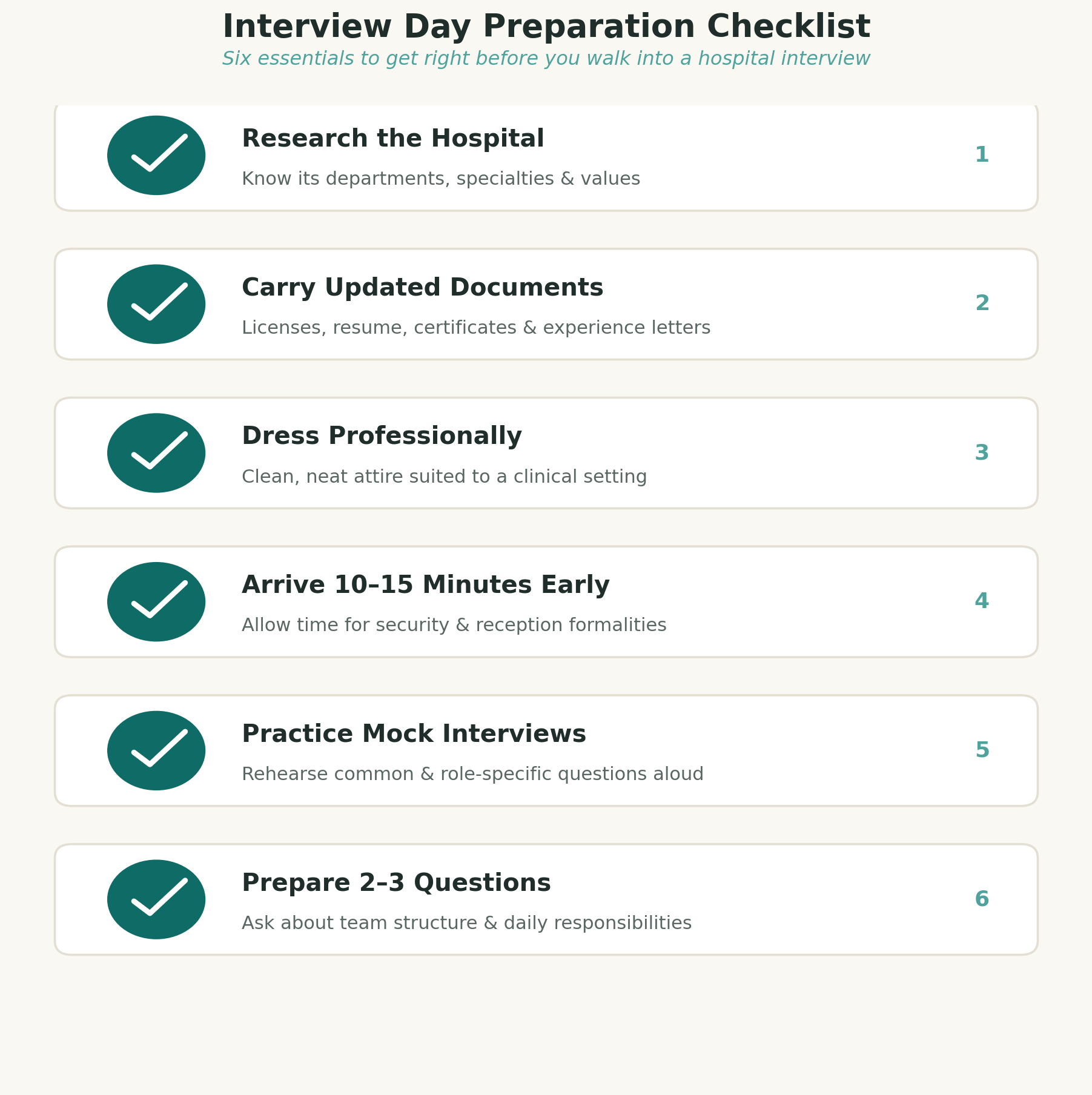
1. Research the Hospital and Its Department
Start by visiting the hospital’s website and learning about its services, specialties, departments, and patient care facilities. Check whether it is a multispecialty hospital, private hospital, government hospital, or specialty centre. If you know the department you will join, spend some time understanding its work and the type of patients it handles. This research can also help you explain why you want to work for that particular hospital.
2. Read the Job Description Carefully
Do not treat the job description as something you only need while applying. Read it again before the interview and identify the qualifications, certifications, experience, technical skills, and responsibilities mentioned by the employer. Then think about examples from your education or previous work that match these requirements. This will help you answer questions with specific examples instead of giving broad or memorized responses.
3. Understand the Interview Format
Ask the recruiter or HR team about the interview format if it has not already been explained. Depending on the hospital and position, you may have an HR discussion, technical interview, panel interview, practical assessment, or more than one interview round. Knowing what to expect gives you time to prepare for each stage and reduces the chances of being caught off guard.
4. Review the Hospital’s Values and Patient-Care Approach
This is the one section I would add. Hospital employers often want candidates who understand the importance of patient safety, confidentiality, empathy, teamwork, and professional conduct. Read the hospital’s mission, values, or patient-care information and think about how your own experience reflects these principles.
5. Check the Practical Details Before Interview Day
Also include a short practical section. Candidates should confirm:
- Interview date and time
- Hospital location and department
- Interviewer’s name, if provided
- Documents they need to carry
- Dress expectations, if mentioned
- Whether there will be a clinical or practical assessment
- Travel time and parking or entry requirements
Get Your Documents and Credentials in Order
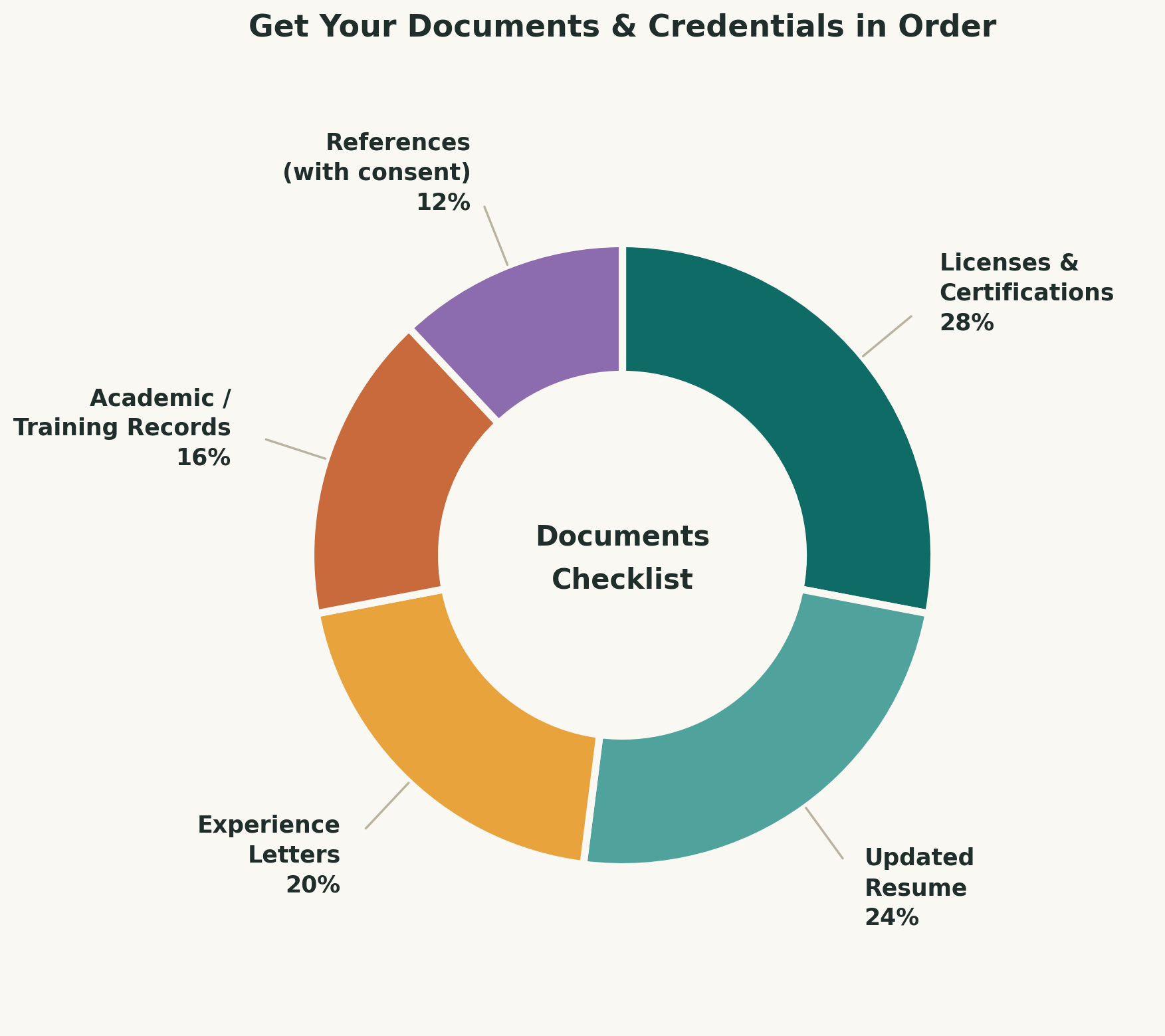
Having your documents ready can prevent last-minute problems. Check the job requirements and organize the qualifications, licenses, certifications, and experience documents relevant to the position.
-
Keep Your Licenses and Certifications Updated
Carry updated copies of your degree, professional registration, license, and relevant certifications. For regulated healthcare roles, make sure your professional registration is current.
Keep both physical and digital copies available in case the employer needs to verify your credentials.
-
Bring an Updated Resume
Update your resume according to the job description. Highlight relevant experience, clinical or technical skills, certifications, and training.
Check your employment dates, qualifications, contact information, and other details for accuracy. Carry a few printed copies if you expect to meet multiple interviewers.
-
Carry Relevant Experience Documents
Keep experience letters, internship certificates, training records, and other documents related to the position organized.
Freshers can carry relevant academic records, internship documents, clinical training certificates, and other qualifications that support their application.
-
Prepare References if Required
If the hospital asks for references, keep the contact details of previous supervisors, managers, trainers, or other professional contacts who can speak about your work and skills.
Always ask for their permission before sharing their details.
Prepare for Common Hospital Interview Questions
Preparing for common questions can make it easier to explain your experience without sounding rehearsed. Focus on giving clear answers supported by real examples whenever possible.
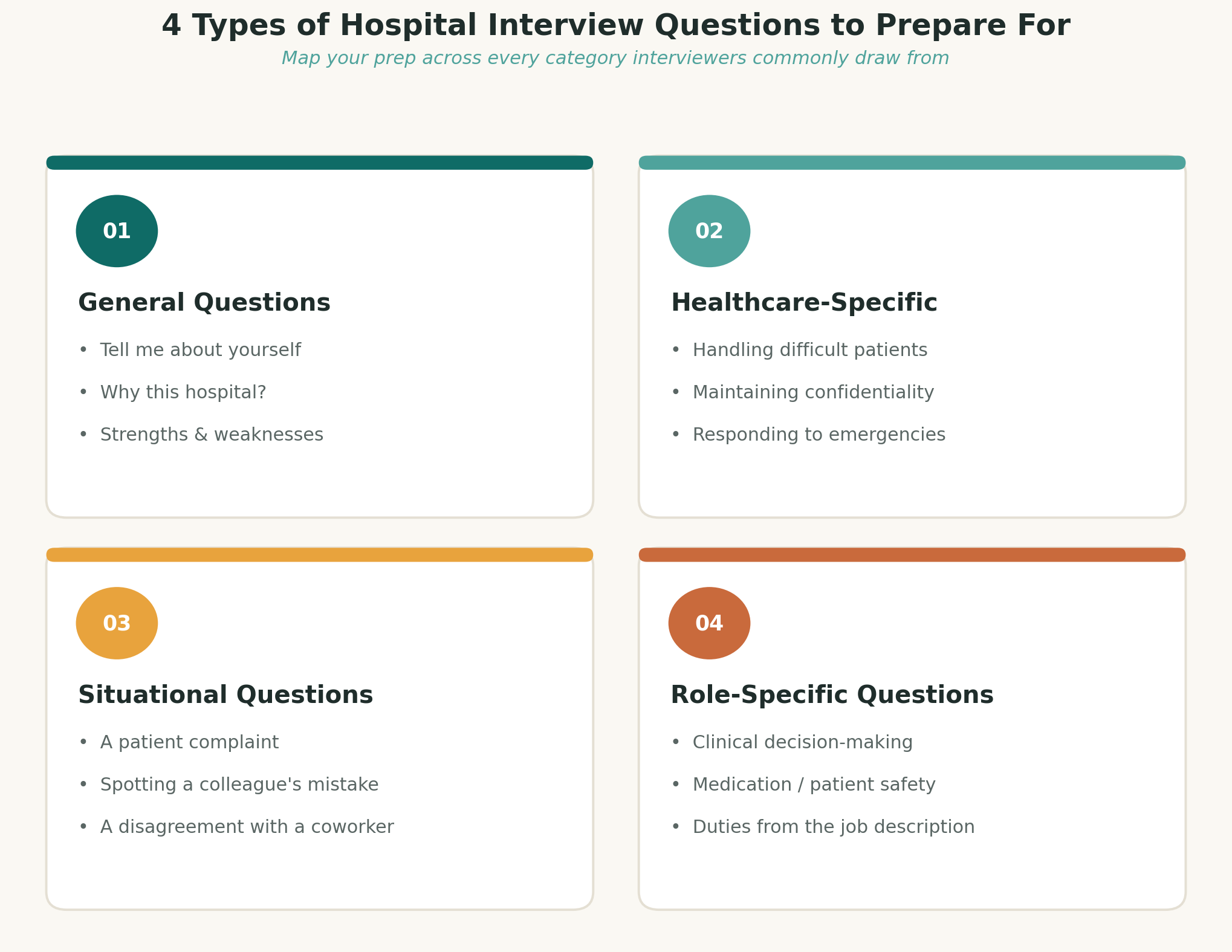
1. General Interview Questions
You may be asked questions such as:
- Tell me about yourself.
- Why do you want to work at this hospital?
- Why should we hire you?
- What are your strengths and weaknesses?
- Why did you choose this healthcare profession?
- Why are you looking for a new opportunity?
Keep your answers relevant to the position and avoid giving unnecessary personal information.
2. Healthcare-Specific Questions
Healthcare employers may ask questions related to patient care, teamwork, safety, and professional responsibilities.
Examples include:
- How do you handle a difficult patient?
- How do you prioritize multiple responsibilities?
- How do you maintain patient confidentiality?
- How do you respond during an emergency?
- How do you communicate with patients and their families?
- How do you work with doctors and other healthcare professionals?
Review the core responsibilities of your role before the interview so you can answer technical questions with confidence.
3. Prepare for Situational Questions
Situational questions help interviewers understand how you may respond to real workplace challenges.
You could be asked:
- What would you do if a patient complained about their care?
- How would you respond if you noticed a mistake?
- How would you handle a disagreement with a colleague?
- What would you do if several patients needed attention at the same time?
Use examples from your previous experience, internship, or training where possible. Explain the situation, what you did, and what happened as a result.
4. Prepare for Role-Specific Questions
The questions will also depend on the position you are applying for. Nurses may face questions about patient monitoring, medication safety, infection control, and emergency care. Doctors may be asked about clinical decision-making and patient management.
Pharmacists, technicians, therapists, laboratory professionals, and other healthcare workers may receive questions related to their specific responsibilities. Review the main duties listed in the job description and revise the knowledge required for that role.
Highlight Soft Skills Hospitals Look For
A strong hospital candidate needs more than clinical or technical knowledge. Hospitals also look for people who can communicate clearly, work well with others, stay calm during difficult situations, and treat patients with respect. During the interview, support these qualities with real examples from your work, training, or internship experience.
1. Show Communication, Empathy, and Adaptability
Clear communication is important when dealing with patients, families, doctors, nurses, and other staff.
Prepare examples that show how you explained information clearly, listened to a patient’s concerns, or handled a difficult conversation. You can also mention situations where you adapted to a new team, shift, process, or unexpected change.
2. Demonstrate Teamwork Under Pressure
Hospital work often requires different professionals to work together, particularly during busy shifts or emergencies. Instead of simply saying that you are a team player, explain a situation where you supported a colleague, solved a problem with your team, or handled a disagreement professionally.
Focus on what you did and what the result was.
3. Show Attention to Detail and Responsibility
Small mistakes can have serious consequences in healthcare, making accuracy and responsibility important qualities.
Explain how you follow procedures, check patient information, maintain accurate records, or protect confidential information. These examples help demonstrate that you understand the importance of following hospital standards and taking responsibility for your work.
Practical Preparation Tips
Preparing your answers is only one part of getting ready for a hospital interview. Planning your interview day, practicing your responses, and understanding professional expectations can help you feel more confident and avoid simple mistakes.
-
Practice with Mock Interviews
Practice common questions and role-specific questions before the actual interview. Ask a friend, senior colleague, or mentor to conduct a mock interview and give you feedback. Speaking your answers aloud can help you improve your confidence, reduce hesitation, and explain your experience more naturally.
-
Dress Professionally
Choose clean, neat, and professional clothing that suits a hospital environment. Keep accessories simple and avoid strong fragrances. Your appearance should be comfortable and professional, allowing the interviewer to focus on your communication and qualifications.
-
Arrive Early
Plan your route before the interview and aim to arrive 10 to 15 minutes early. This gives you enough time to find the correct department, complete security or reception procedures, and settle down before the interview. Arriving early also helps you avoid unnecessary stress caused by traffic or delays.
-
Prepare Questions for the Interviewer
Prepare two or three questions about the position, department, training, or daily responsibilities. For example, you can ask about the team’s working structure or what the first few months in the role may look like. Relevant questions show that you are interested in understanding the position, not just getting through the interview.
-
Prepare for Situational Questions
Hospital interviews may include questions about patient complaints, emergencies, teamwork, workplace conflicts, or handling multiple responsibilities. Think about real situations from your previous work, internship, or training and prepare clear examples of how you handled them. This makes your answers more specific and easier for the interviewer to understand.
Conclusion
Preparing for a hospital job interview is not about memorizing perfect answers. It is about understanding the role, researching the hospital, organizing your credentials, and preparing examples that show how you work in real situations.
Whether you are an experienced healthcare professional or a fresher starting your career, good preparation can help you communicate your skills more clearly and handle the interview with greater confidence.
Review the job description, practice relevant questions, prepare your documents, and think about how your experience connects with the responsibilities of the role.
If you are searching for healthcare opportunities, Staffton Health can help you explore relevant hospital roles and take the next step in your job search.
FAQs
1. How long does a hospital job interview process usually take?
Hospital hiring often involves multiple stages, including HR screening, department-level interviews, and sometimes a final panel round. Depending on the hospital’s size and the role’s seniority, the entire process can take anywhere from two weeks to over a month to complete.
2. Do hospitals conduct background checks before hiring?
Yes, most hospitals run thorough background checks before finalizing an offer. This typically includes verifying licenses, certifications, and past employment history, along with criminal record checks for roles involving direct patient contact, since patient safety remains a top priority.
3. Can I switch from a non-clinical to a clinical role within a hospital later?
Internal transitions from non-clinical to clinical roles do happen, but they usually depend on completing the required certifications, additional training, and availability of openings. If this interests you, it is worth asking recruiters about internal growth pathways during the interview itself.
4. What happens if I am asked a question I don’t know the answer to during the interview?
Stay calm and honest instead of guessing your way through it. Acknowledge the gap, briefly explain how you would find the correct information, and if possible, relate your response to a similar situation you have handled well before.
5. Is it common for hospitals to conduct a second or final round interview with senior management?
Yes, particularly for specialized, senior, or leadership-level roles. Hospitals often include an additional round with senior management or medical directors to assess long-term fit, leadership potential, and alignment with the hospital’s values beyond just technical competence.