
Finding qualified medical professionals has never been harder, and hospitals feel it the moment a single vacancy opens on a busy floor.
According to the 2026 NSI National Health Care Retention & RN Staffing Report, the average cost of losing one bedside registered nurse has reached $60,090, and turnover across the industry climbed again in 2025 after a few years of gradual improvement.
Every open role means overtime, reliance on travel staff, and added pressure on the team left behind. Hospitals and clinics that want to protect patient care quality need hiring strategies built for how healthcare actually works, not generic recruiting playbooks.
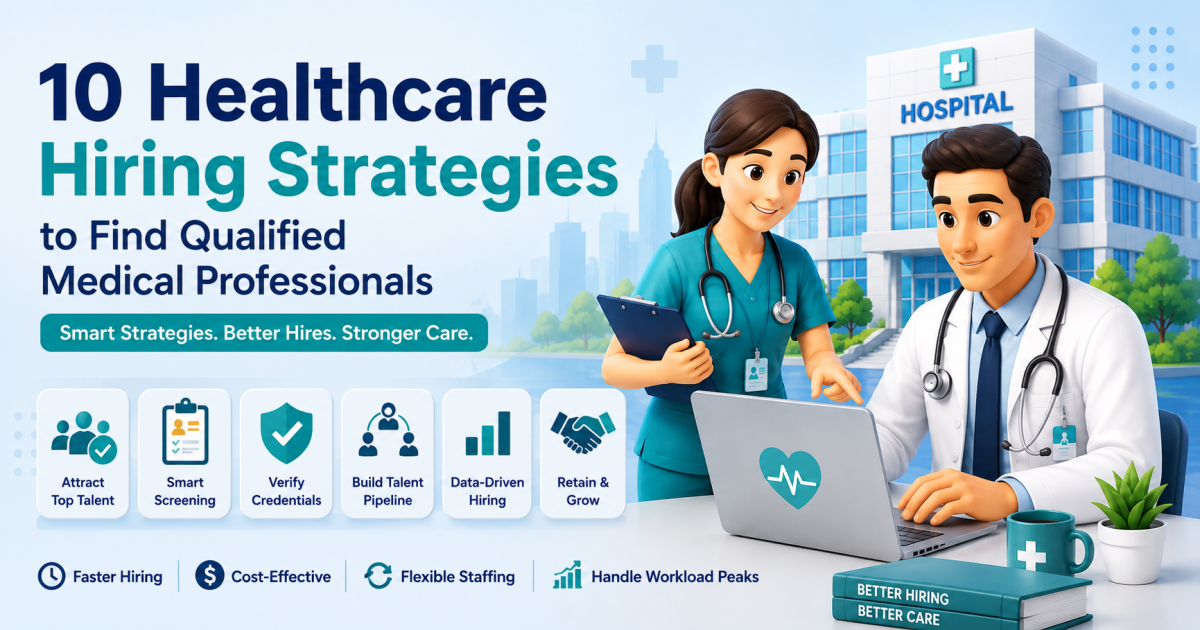
In this guide, you will learn ten proven approaches to help you find, screen, and retain the right medical talent faster.
Why Healthcare Hiring Needs a Different Approach
Hiring a nurse or physician isn’t like filling a retail or office role. Every candidate needs license checks, background verification, and specialty matching before an offer can go out, and delays put patient care on the line.
Keypoints:
- Every hire must pass through credential and license verification, since an unverified nurse or physician can’t legally start work, no matter how strong their resume looks.
- Healthcare hiring strategies carries a heavier compliance load than most industries, covering HIPAA training, background checks, drug screening, and active board certifications before onboarding begins.
- Nursing and physician shortages have pushed hospitals into constant competition for the same small pool of qualified candidates, making speed and precision non-negotiable.
- These pressures mean hiring teams need healthcare-specific knowledge and proven methods, not generic recruiting advice borrowed from other industries.
10 Healthcare Hiring Strategies to Find Qualified Medical Professionals
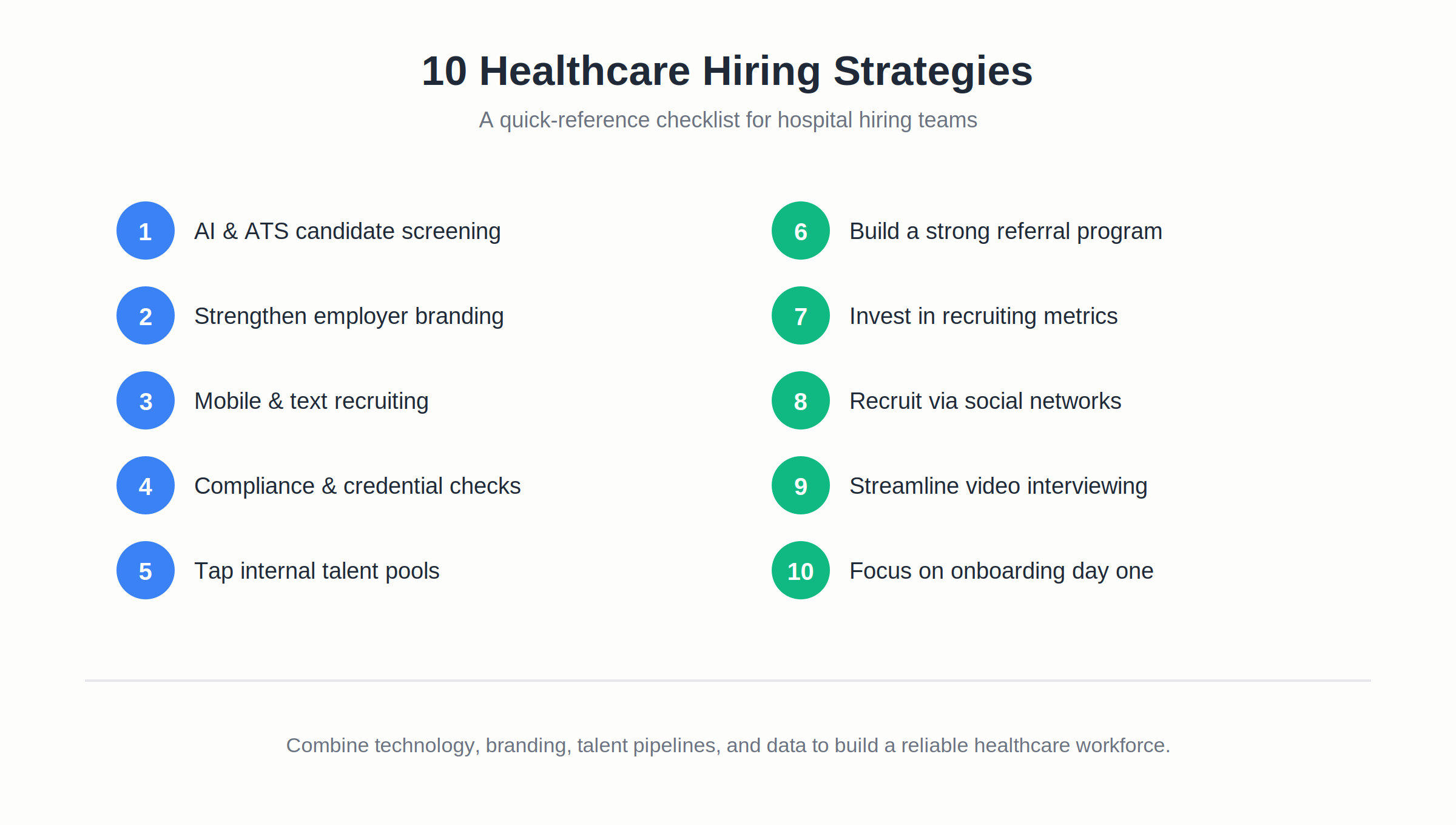
1. Use AI and Applicant Tracking Software to Screen Candidates Faster
Manual resume screening slows down hiring when hundreds of applications arrive for one open role. AI-powered applicant tracking software can sort candidates by specialty, shift preference, and credentials in minutes instead of days.
- Matches nurses, technicians, and specialists to open roles based on their credentials and experience
- Flags applicants with expired licenses or missing certifications before a recruiter reviews the resume
- Highlights candidates holding preferred certifications, like ACLS or BLS, without manual searching
- Filters large applicant pools by shift, department, and specialty so recruiters focus on qualified candidates first.t
2. Strengthen Employer Branding to Attract Healthcare Talent
Pay alone rarely keeps skilled staff from leaving for a competitor down the street. A strong employer brand shows candidates why your organization is worth joining and staying with.
- Share real stories from current nurses, doctors, and allied health staff instead of generic marketing copy
- Show how staff work makes a difference in patient lives, not just job duties
- Highlight career growth support, including tuition reimbursement, certification renewals, and clear advancement paths.
- Be open about burnout prevention resources, like counseling, wellness programs, and manageable schedules.
3. Optimize Mobile and Text Recruiting for Busy Clinicians
Nurses and physicians rarely have time to sit down for a phone call between shifts. Mobile-friendly and text-based recruiting lets them apply, upload credentials, and respond to recruiters from wherever they are.
- Sends job openings and interview reminders directly through text messages
- Lets candidates complete applications and submit documents from a phone
- Speeds up response times for last-minute shift openings and urgent hires
- Reduces missed interviews and delayed paperwork through automatic reminders
4. Prioritize Compliance and Credential Verification
A qualified candidate is only useful once background checks, license verification, and certification review are complete. Slow credentialing can cost hospitals strong candidates to competitors who move faster.
- Automates license checks, background screening, and certification verification to cut delays
- Flags candidates needing visa sponsorship or multi-state licensing early in the process
- Reduces dependence on outside staffing agencies for last-minute coverage
- Builds a hiring process that meets compliance standards without slowing down offers
5. Tap Into Internal Talent Pools Before Hiring Externally
Current staff already understand your culture, systems, and patients, making them a valuable source for filling new roles quickly. Internal mobility keeps experienced people engaged instead of losing them to other employers.
- Revisits previous candidates, alumni networks, and former float staff who already know the organization
- Offers cross-training and shadowing opportunities to prepare staff for higher-level roles
- Builds mobility paths so administrative staff can move into patient-facing positions
- Keeps institutional knowledge in-house instead of starting the search from zero
6. Build an Employee Referral Program Worth Participating In
Busy healthcare workers won’t refer candidates for a small gift card. A referral program needs real incentives to get staff actively recommending people they trust.
- Provides higher rewards for hard-to-fill roles, including night shift ICU staff or travel nurses
- Makes sharing simple with ready-made social media templates for staff
- Tracks referral success by department and role to see what works
7. Invest in Data and Recruiting Metrics
Your hiring software already collects information that shows where the process breaks down. Reviewing this data regularly helps you fix problems before they cost you good candidates.
- Reviews time-to-fill, turnover, and onboarding satisfaction by department and role
- Identifies which credential levels or units struggle most with early turnover
- Uses seasonal hiring patterns to plan staffing needs before shortages hit
- Compares recruiting sources to find which ones produce long-term hires
8. Recruit Through Social Media and Professional Networks
Healthcare workers spend time on platforms like LinkedIn, Facebook, and TikTok between shifts, and meeting candidates there feels more natural than a cold job posting. Building a presence on these channels helps you reach passive candidates before they start job hunting actively.
- Connects with niche healthcare groups and communities on social platforms
- Engages with nurse and physician content creators through comments and shares
- Posts behind-the-scenes content showing real teamwork during patient care
- Partners with nursing schools and alumni boards to build a steady talent pipeline
9. Streamline Video Interviewing for Faster Decisions
Video interviews save time for candidates and hiring teams alike, especially when candidates and interviewers work in different time zones. Recorded interviews also work well for high-volume roles like medical assistants, where in-person interviews aren’t practical for every applicant.
- Allows candidates to interview from home instead of taking time off work
- Supports recorded, self-paced interviews for high-volume positions
- Lets multiple interviewers join from different locations without travel
- Speeds up decisions for specialist or leadership roles that involve relocation
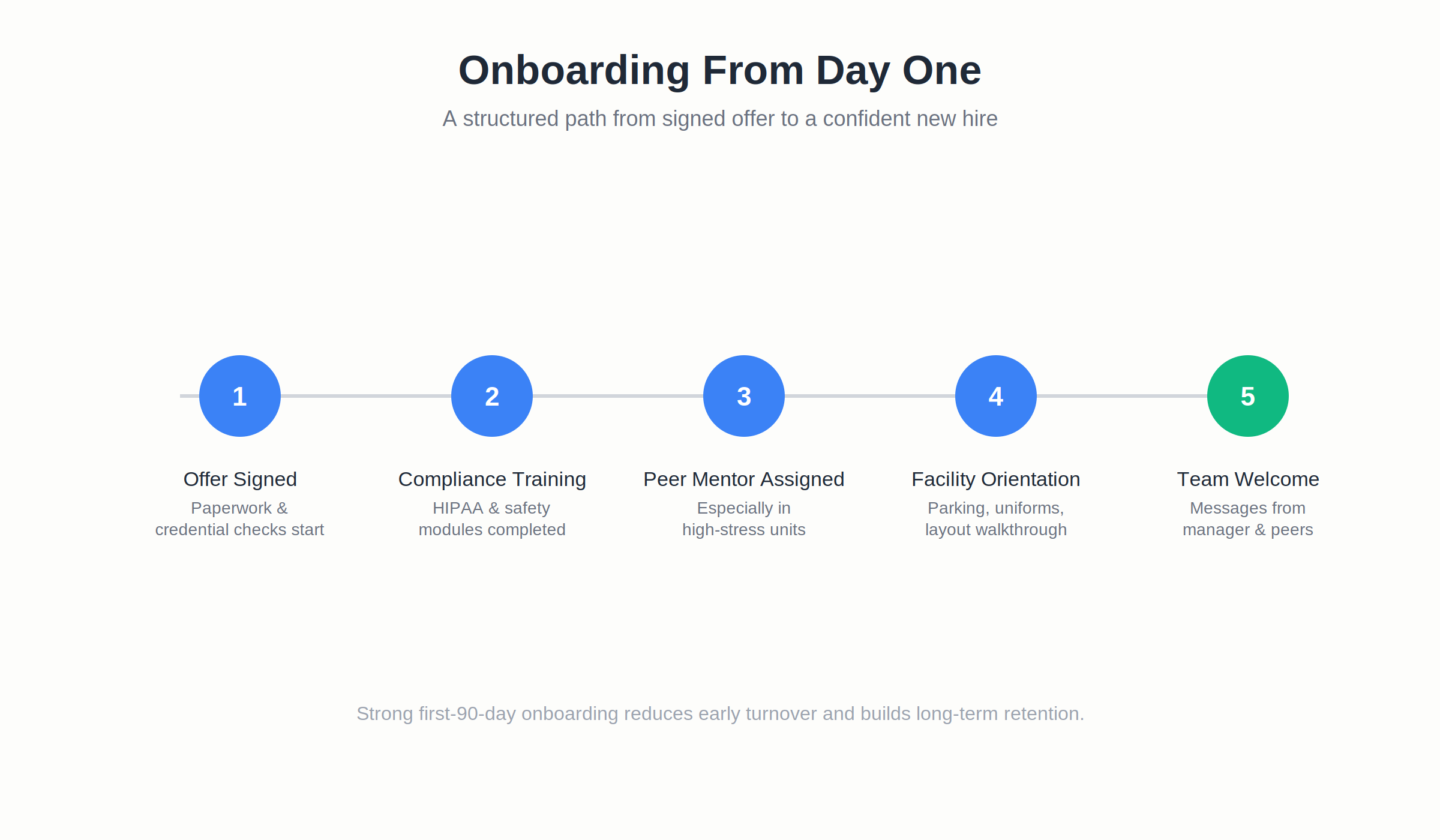
10. Focus on Onboarding From Day One
The healthcare hiring strategies doesn’t end when a candidate accepts an offer. Fast, organized onboarding keeps new hires engaged and reduces the chance they leave within the first few months.
- Starts paperwork, credential verification, and compliance training right after the offer is signed
- Assigns peer mentors to new hires, especially in high-stress departments like the ER
- Provides practical details on parking, uniforms, and facility layout before day one
- Welcomes new hires with messages from managers and future teammates to build connection early.
Conclusion
Healthcare hiring strategies requires more planning than simply publishing a vacancy and waiting for applications. Hospitals need to compete for qualified professionals while managing licensing requirements, credential checks, interviews, staffing needs, and candidate expectations.
A stronger approach combines technology, employer branding, talent pipelines, referrals, data, passive candidate sourcing, efficient interviews, and structured onboarding.
For hospitals and healthcare facilities that need additional support with sourcing and connecting with qualified professionals, Staffton Health provides a healthcare-focused recruitment platform designed to connect organizations with candidates across nursing, allied health, and other healthcare roles.
The objective is simple: create a hiring process that helps healthcare organizations spend less time dealing with recruitment bottlenecks and more time building a reliable workforce.
FAQs
1. What is the biggest challenge in healthcare hiring today?
The biggest challenge is finding candidates fast enough while still verifying licenses, certifications, and background checks properly. Hospitals often lose strong candidates to competitors simply because their hiring process takes too long.
2. How long does it typically take to hire a nurse or physician?
Nursing roles usually take a few weeks to fill, while physician and specialist roles can take several months due to credentialing, licensing, and interview scheduling across multiple stakeholders.
3. What tools help hospitals hire faster?
Applicant tracking systems, automated credential verification tools, and text recruiting platforms help hospitals screen candidates, confirm licenses, and communicate with applicants without adding manual work for recruiters.
4. How can smaller clinics compete with hospital systems for talent?
Smaller clinics can compete by offering flexible schedules, a strong employer brand, and personal touches like mentorship or direct communication with leadership, things large hospital systems often struggle to match.
5. Why is onboarding important in healthcare hiring strategies?
Onboarding sets the tone for how long a new hire stays. Healthcare staff who receive proper training, mentorship, and support in their first few months are far less likely to leave within the first year.