
Hospitals across the world could face a shortage of 10 million health workers by the year 2030, according to the World Health Organisation.
This warning makes one thing clear: a slow or disorganized hospital recruitment process no longer stays a back-office problem. It becomes a patient care problem, a staff burnout problem, and a hospital reputation problem.
Every open position in a hospital, from a staff nurse role to a senior radiologist post, moves through a fixed set of stages before a new hire signs the offer letter and walks through the door.
When hospital HR teams understand these stages in detail, hiring moves faster, fewer good candidates drop out midway, and the recruitment process in hospital departments stops feeling like guesswork.
This guide walks through the complete hospital recruitment process, stage by stage, along with the newest trends shaping medical recruitment steps in 2026.
Why the Hospital Recruitment Process Matters More in 2026
Nursing shortages, faster patient volumes, and stricter compliance rules put pressure on every hospital HR process today. A hospital that treats hiring like a checklist loses good candidates to hospitals that treat it like a strategy.
- Nurses and allied health roles now get multiple offers within days, not weeks.
- Hospitals that take longer than 30 days to hire lose top candidates to competitors
- Compliance and credential checks add extra steps most industries do not deal with
- Patient safety depends directly on how well each clinical hiring stage runs.
The 9 Stages of Hospital Recruitment Process Explained
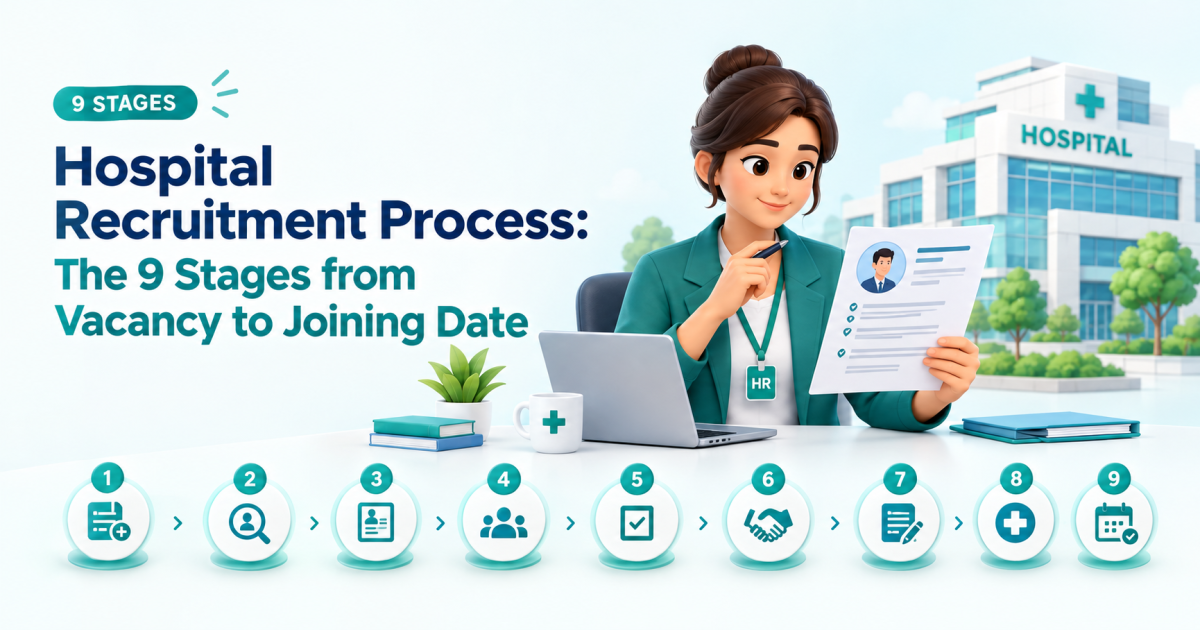
Every hospital recruitment process follows a similar pattern, even when hospital size or specialty changes. Here is each stage broken down in detail, from vacancy to joining date.
1. Identifying and Approving the Vacancy
The hospital recruitment process starts when a department head reports a staffing gap, whether from resignation, retirement, new bed capacity, or a new service line.
HR and finance teams review budget approval, headcount limits, and urgency before opening the role. This first clinical hiring stage sets the tone for everything that follows.
- Department raises a healthcare staffing request with reason and urgency level
- HR confirms budget and headcount approval with hospital administration
- Role gets classified by department, shift pattern, and employment type
2. Job Analysis and Role Requirement Mapping
Once approved, HR works with the department head to map out the exact skills, certifications, and experience level the role demands.
This step matters more in hospitals than in most industries, since a mismatch between job requirements and candidate skills directly affects patient outcomes and regulatory standing.
- List required licenses, certifications, and years of experience
- Define shift timing, on-call duties, and reporting structure
- Set salary band based on market rate and internal parity
3. Sourcing and Advertising the Vacancy
Hospitals now post openings across job boards, healthcare-specific platforms, college placement cells, and employee referral programs, instead of relying on a single channel.
A strong sourcing strategy for the medical recruitment process pulls from passive candidates too, since many skilled nurses and doctors are not actively job hunting when the right offer appears.
- Post on healthcare-focused job boards and general job portals together
- Use employee referral programs, since hospital staff know qualified peers
- Partner with nursing colleges and medical institutes for fresh talent
- Run targeted social media hiring campaigns for hard-to-fill roles
4. Screening and Shortlisting Applications
Recruiters filter incoming applications against the job requirements set earlier, checking education, license validity, and relevant experience. Many hospitals now use applicant tracking systems with automated resume screening to cut this stage from days down to hours, freeing recruiters to focus on stronger candidates.
- Filter by mandatory license, certification, and minimum experience
- Shortlist candidates based on skill match, not just keyword match
- Flag incomplete applications early, instead of late in the process
5. Credential Verification and Compliance Checks
This stage sets hospital hiring apart from almost every other industry.
Every candidate’s medical license, degree, registration number, and prior work history gets verified through official bodies before an interview even happens. Skipping or rushing this step creates legal risk and patient safety risk down the line.
- Verify medical council registration and license validity
- Confirm degree and certification authenticity with issuing institutions
- Check for disciplinary history or license suspensions
6. Interviews and Clinical Skills Assessment
Shortlisted candidates go through structured interviews with department heads, HR, and sometimes a clinical panel for specialist roles. Many hospitals now add practical skills assessments or simulation-based tests, since a resume alone rarely shows how a candidate handles real patient scenarios under pressure.
- Conduct department-level technical interviews and HR rounds
- Add practical or simulation-based skills tests for clinical roles
- Involve senior doctors or nursing heads for specialist positions
7. Reference and Background Checks
Before an offer goes out, HR contacts previous employers, verifies employment dates, and confirms conduct history. For clinical roles, this often includes checking malpractice records and disciplinary action history, which protects both patients and the hospital’s reputation over the long run.
- Contact former employers to confirm role, tenure, and conduct
- Check for malpractice claims or disciplinary records where applicable
- Run standard police verification and address confirmation
8. Offer Negotiation and Management Approval
HR extends a formal offer covering salary, benefits, shift structure, and joining date, then negotiates within approved limits when a candidate pushes back.
Senior management signs off on final terms for higher-level or high-cost roles, since these hires affect long-term department budgets.
- Present offer letter with salary, benefits, and reporting details
- Negotiate within pre-approved salary bands and perks
- Get final sign-off from department head and finance for senior roles
9. Onboarding and Joining Date Confirmation
The final clinical hiring stage covers document collection, hospital ID and system access setup, mandatory training, and department orientation.
A structured onboarding plan in the first 30 days lowers early attrition and helps new hires feel confident treating patients sooner, instead of learning hospital systems on the job.
- Collect original documents and complete statutory paperwork
- Set up hospital ID, system logins, and department access
- Schedule mandatory compliance and safety training before ward duty
- Assign a mentor or buddy for the first few weeks
New Trends Shaping the Hospital Hiring Workflow in 2026
Hospital HR teams no longer rely only on manual resume screening and paper files. Fresh technology and healthcare hiring trend approaches are reshaping how hospitals fill open positions faster and with better matches.
1. AI-Powered Screening and Credential Verification
Applicant tracking systems now flag license mismatches, missing certifications, and resume gaps within minutes rather than days.
Many hospitals pair this with automated background verification tools, cutting the credential verification stage from weeks down to days, without cutting corners on compliance.
- Automated resume parsing matches skills against job requirements instantly
- Digital license verification tools cross-check registration numbers in real time
- Chatbots handle first-round candidate queries and interview scheduling
2. Skills-Based Hiring Over Degree-Only Filtering
More hospitals now test practical clinical skills through simulation labs or supervised trial shifts, instead of relying purely on degree and years of experience. This shift helps hospitals find strong performers who might get filtered out by rigid resume screening rules.
- Simulation-based assessments for nursing and technician roles
- Trial shifts before final offer for critical care positions
- Skill certifications weighted equally alongside formal degrees
3. Mobile-First and Faster Application Journeys
Candidates now expect to apply from a phone in a few minutes, not fill out long forms on a desktop. Hospitals with mobile-friendly, short application forms report noticeably higher completion rates, since healthcare workers often browse jobs between shifts, on breaks, or late at night.
- One-click apply options through job portals and WhatsApp
- Shorter application forms with fewer mandatory fields upfront
- SMS and WhatsApp updates through every recruitment process in the hospital stage
Common Challenges in Hospital HR Process and Practical Fixes
Even well-run hospitals hit repeat problems during hiring. Recognizing these challenges early helps HR teams fix them before they slow down the entire hospital recruitment process.
1. Long Credential Verification Delays
Manual verification with medical councils and universities can stretch past two or three weeks, delaying joining dates and frustrating candidates who have other offers. Digital verification partners and pre-built checklists cut this timeline down noticeably, keeping strong candidates from walking away mid-process.
- Use digital verification services instead of manual letter requests
- Build a standard checklist so nothing gets missed or repeated
- Start verification alongside interviews, not after an offer goes out
2. High Early Attrition Among New Hires
Many hospitals lose new hires within the first three months, often because onboarding felt rushed or unclear. A structured 30-60-90 day plan, paired with a mentor system, gives new clinical staff a clearer path and reduces early exits.
- Assign mentors for the first 90 days of employment
- Set clear performance and training milestones early on
- Gather feedback during 30-60-90 day check-ins to catch issues early
3. Competition for Skilled Talent in Tier-1 and Tier-2 Cities
Metro hospitals compete with digital health startups and better-funded chains for the same pool of nurses and doctors, while Tier-2 cities face a smaller talent pool overall. Building a strong employer brand and offering growth paths helps hospitals stand out beyond salary alone.
- Highlight training programs, career growth, and work culture in job posts
- Build partnerships with nursing and medical colleges for steady pipelines
- Offer relocation support for hard-to-fill roles in smaller cities
Conclusion
A well-run hospital recruitment process protects patient care, keeps hospital HR teams from burning out, and keeps good candidates from walking away mid-hire.
From the first approved vacancy through onboarding and the final joining date, each of the nine stages covered here plays a part in building a stronger, more reliable hospital HR process.
Staffton Health helps hospitals move through this recruitment process in hospital settings faster, with pre-verified candidate profiles, license and credential checks already completed, and a talent pool built specifically for healthcare roles.
Instead of starting sourcing and verification from zero, hospitals working with Staffton skip straight to interviews with candidates who already meet the compliance bar, shortening the hospital hiring workflow from weeks down to days.
Frequently Asked Questions
1. How long does a hospital recruitment process usually take?
A standard hospital recruitment process takes between 3 and 6 weeks from vacancy approval to joining date, depending on role seniority and license verification time. Specialist roles, like senior surgeons or radiologists, often take longer because of added credential checks and interview rounds.
2. What is the first stage of the hospital recruitment process?
The first stage is vacancy identification and budget approval, where a department reports a staffing gap and hospital administration signs off on hiring before any job posting goes live.
3. Why does credential verification take so long in hospital hiring?
Credential verification involves confirming license numbers, degree authenticity, and disciplinary history through official medical councils and universities, which often reply slowly to manual requests. Digital verification tools now cut this timeline down considerably.
4. How can hospitals reduce hiring delays in the recruitment process?
Hospitals can shorten delays by starting credential verification alongside interviews rather than after an offer, using digital verification tools, and building a ready pipeline through referral programs and college partnerships.
5. Does Staffton help with credential verification during hospital hiring?
Yes. Staffton pre-verifies candidate licenses, degrees, and work history before presenting profiles to hospitals, cutting several weeks out of the standard hospital recruitment process.