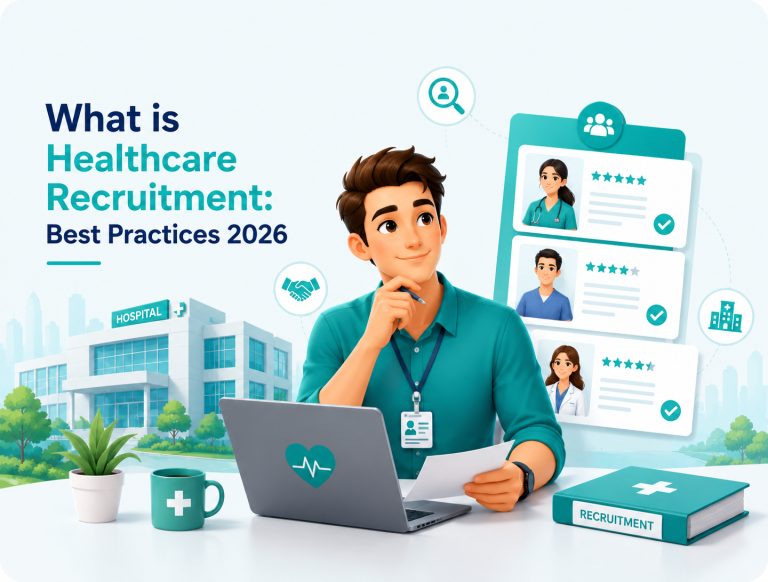

Healthcare hiring trends have moved quickly in recent years, with organizations putting more money into digital health systems, healthcare analytics, AI-driven operations, and cross-functional talent.
From the lasting effects of the pandemic to the sharp rise of artificial intelligence in hiring itself, the recruitment landscape looks nothing like it did even three years ago.
These shifts are reshaping the future healthcare workforce and opening fresh opportunities across clinical, research, and health-technology careers.
India’s healthcare sector is growing quickly too, with clinical research, digital health platforms, and hospital services expanding side by side.
Hiring in the sector rose 62 percent year-on-year and added more than 7.5 million new jobs, a pace that has made it one of the country’s fastest-growing employment sectors.
Even so, demand for specialized and interdisciplinary skills keeps climbing faster than the supply of trained professionals.
Artificial intelligence, digital health, analytics, and precision medicine are reshaping hospital hiring. Hospitals now need professionals skilled in clinical care, health data, and digital operations.
This guide breaks down the ten trends reshaping healthcare recruitment in 2026, based on hiring managers. Each includes what’s happening, what the data shows, and what to do next.
Why Healthcare Hiring Trends Look Different in 2026
Healthcare hiring has shifted from a temporary crisis to a permanent condition. The pandemic-era scramble felt survivable because everyone assumed it would end.
It didn’t. What changed in 2026 is that hiring teams stopped waiting for the market to settle and started building around it instead.
Clinicians now treat flexibility as a baseline, not a perk. Candidates compare employers the way patients compare hospitals, reading reviews before they read job descriptions.
And the slowest part of hiring is rarely finding someone anymore; it’s getting them credentialed and through the door. The old playbook no longer fills roles.
The 10 Healthcare Hiring Trends Shaping 2026
1. AI Tools Are Changing How Hospitals Pick Candidates
Most hospitals now use software that reads resumes automatically. It sorts candidates by how well they match the job, and it flags missing certificates before a recruiter even opens the file.
This speeds hiring, but it comes with a real risk. A strict filter can quietly turn away a good nurse or technician just because of a formatting issue or an unusual gap in their work history. Hospitals that do this well still have a person check every rejection by hand, not just the shortlist. If you want to see where hiring delays actually happen, reducing time to hire in healthcare breaks it down step by step.
2. Urgent Hiring Drives Are Becoming Routine, Not Exceptional
More people are searching for healthcare jobs urgently hiring is keeping up with same-week interviews, walk-in hiring days, and offers that go out fast instead of dragging on for a month.
This is good news if you can move quickly. But it also means hospitals still running a slow, many-step process end up losing good candidates to the hospital down the road that says yes first.
3. Public Health and Government-Linked Roles Are Expanding
Job vacancies in public health are growing fast, thanks to government health missions, new city hospitals, and rural health programs.
Many of these jobs sit outside private hospitals altogether, covering community health centers, government dispensaries, and public health projects.
For candidates, this opens a whole new path beyond private hospital hiring. There is often less competition for these roles, plus steadier hours and simpler application steps. If you are tired of chasing private hospital jobs, public health work is worth a serious look this year.
4. Retention Budgets Overtake Recruitment Budgets
Health care assistant jobs and other allied roles are opening up to people without a specific degree. Hospitals are dropping strict qualification rules for jobs like patient coordination, admin support, and non-clinical assistant work, and hiring based on real skill instead.
This is a healthy shift, since many degree rules were never needed for these jobs. That said, roles needing a legal license, like nursing or doctor posts, still keep their strict rules, and hospitals must keep that line clear.
5. Flexible and Contract Staffing Is Now a Standing Budget Line
Hospitals used to treat temporary staff like an emergency fix. Not anymore. Contract and per diem workers now cover planned, repeat gaps, especially during busy seasons or in specialty units where full-time hiring takes too long. Smart hospitals plan for this ahead of time instead of scrambling once a gap appears.
Permanent vs temporary healthcare staffing breaks down exactly when each option makes the most sense, so hiring teams stop guessing and start budgeting for flexible staff properly.
6. Specialty Nursing Shortages Are Deeper Than General Shortages
The nursing shortage story has changed. It is no longer about total numbers alone. ICU, operation theatre, labour and delivery, and critical care units face the toughest gaps, since these jobs need real experience that takes years to build.
A general nursing post rarely fills a specialty seat anymore, since candidates need matching, hands-on background.
Hospitals that build separate pipelines for each specialty, instead of running one big nursing funnel, are filling these tough seats faster with hiring talents and with far less trouble.
7. “Near Me” and City-Specific Job Searches Keep Rising
Health care jobs near me is still one of the most common searches among healthcare job seekers today. Hospitals are noticing this and now post city-specific job listings instead of generic ads with no clear location.
This small change matters a lot, since candidates who search this way already know where they want to work.
The only real question left is whether the role fits their skills. City-based listings convert faster and cut down on wasted applications for both sides.
8. Time to Hire Becomes the Deciding Competitive Factor
More hospitals now post healthcare jobs urgently hiring, and this has become one of the clearest hiring trends of the year. Instead of running a slow, weeks-long process, many hospitals hold same-week interviews, walk-in hiring days, and quick rolling offers.
This helps candidates who can move fast and want a job right away. But it also means hospitals that still take too long lose good nurses and staff to others nearby who hire quicker. Speed now decides who gets the best talent first.
9. Employer Reputation Decides Application Volume
Candidates now check a hospital’s reputation the same way patients check a hospital’s care quality. Before applying, most people read reviews and ask someone who already works there. A strong job post can no longer fix a pattern of ignored, negative reviews online.
Hospitals that answer feedback honestly, and let real staff talk openly about daily work life, get stronger and more qualified applications without spending extra money on job ads. Reputation now does more hiring work than any posting ever could.
10. Workforce Data Is Being Used to Predict Gaps, Not Just Report Them
Most hospitals already track hiring numbers, but few actually use that data to plan ahead. The real shift now is moving from reviewing what already got filled to predicting where gaps will open next.
This means knowing which units are close to a wave of retirements, which roles always take longest to fill, and which jobs will need contract cover soon.
Hospital manpower planning turns this from a last-minute scramble into a calm process built before anyone hands in a resignation letter.
How Staffton Helps
This is the gap Staffton was built to close. Instead of running sourcing, screening, credentialing, and communication across separate systems and inboxes, hospitals manage the whole hiring funnel in one place.
A few of the trends above map directly onto how the platform works:
- Faster urgent hiring: automatic credential checks against registries and medical boards cut the wait that usually stalls urgent job posts.
- Specialty pipelines: separate candidate pools for ICU, operation theatre, nursing, and allied health, instead of one mixed list.
- City-level matching: listings sorted by city, so people searching health care jobs near me and hospitals hiring locally find each other fast.
- Verified allied and assistant roles: skills-based profiles for health care assistant and non-clinical jobs, with license checks still kept separate and strict where the law needs them.
Direct in-app messaging keeps candidates engaged through the part of the process where most offers are lost.
Talk to our team about your open clinical roles, or explore Staffton for hospitals to see how it fits your current workflow.
FAQs
1. What are the biggest healthcare hiring trends in 2026?
The biggest shifts are AI-assisted candidate screening, specialty-specific nursing shortages replacing general ones, contract labour becoming a permanent budget line, retention spending overtaking recruitment spending, and flexible scheduling turning into a baseline expectation rather than a perk offered to attract candidates.
2. Why is healthcare hiring so difficult right now?
Healthcare hiring is difficult because demand keeps growing while experienced clinicians retire faster than replacements gain experience. Every facility in a given market competes for the same candidates, and the slowest part of hiring is usually credentialing and internal approvals rather than finding people to apply.
3. How can hospitals reduce time to hire?
Hospitals reduce time to hire by mapping every step from application to start date, then removing approval handoffs that add delay without adding judgment. Automating credential and licence verification helps most, since that stage causes the longest waits. Candidates accept the first credible offer they receive.
4. Is AI replacing recruiters in healthcare?
No. AI is changing what recruiters spend time on rather than replacing them. Screening tools handle parsing, ranking, and verification, while recruiters focus on candidate relationships and judgement calls. Employers remain legally responsible for automated hiring decisions, so human review of rejections is still necessary.
5. Which healthcare roles are hardest to fill in 2026?
The hardest roles to fill are those needing experience that cannot be built quickly. Critical care, perioperative, labour and delivery, and behavioural health nursing top the list, along with specialist physicians in rural areas. Allied health roles like radiology technologists are also increasingly competitive.