
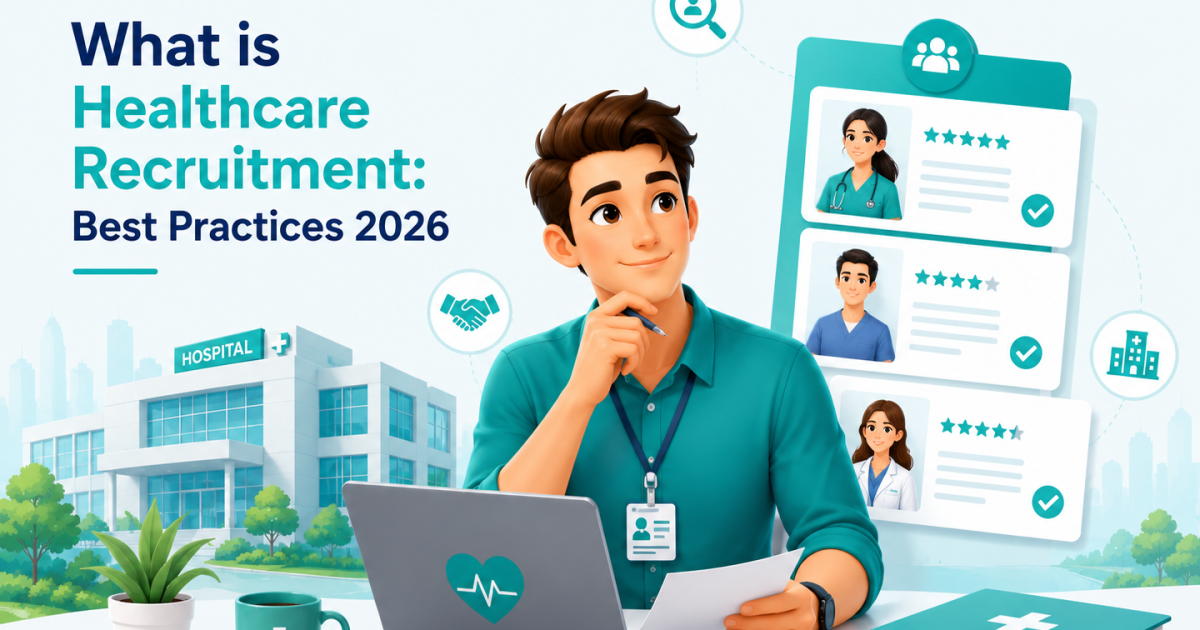
What is healthcare recruitment, and why does it feel harder than hiring in most other industries?
A single open position in a hospital can mean longer wait times for patients, tired staff covering extra shifts, or a department running below capacity. Every delayed hire has a ripple effect that goes beyond the HR department and reaches patients directly.
The need for effective healthcare recruitment is becoming more urgent as the global supply of healthcare professionals struggles to keep pace with demand. The World Health Organization projects a shortage of around 11 million health workers worldwide by 2030, with low- and middle-income countries expected to face a significant share of the shortage.
This guide walks through What Is Healthcare Recruitment involves, the problems hospitals face while hiring, and the practices that actually work in 2026.
Whether you manage hiring for a large hospital network or a single clinic, the ideas below can help you build a hiring process that keeps pace with patient demand.
What Is Healthcare Recruitment?
Healthcare recruitment is the process of finding, screening, and hiring people who work in hospitals, clinics, and other medical settings.
This covers doctors, nurses, technicians, therapists, and support staff who keep a facility running day to day.
Unlike a typical corporate job opening, a healthcare role often needs license checks, background verification, and specialty-specific skills before anyone signs an offer letter. Even one missed step in this process can delay a hire by weeks.
Why Healthcare Recruitment Works Differently
Three things set healthcare hiring apart from other fields:
- Licensing and compliance: Every candidate needs valid certification, and hospitals cannot skip this step, even under pressure to fill a shift fast.
- Round-the-clock staffing needs: Patients need care every hour of the day, so shift-based hiring is common, and gaps directly affect patient outcomes.
- High stakes for mistakes: A wrong hire in a clinical role carries more risk than a wrong hire in most other departments.
These factors make speed and accuracy equally important, which is a hard balance to strike with manual hiring methods.
Common Challenges in Healthcare Recruitment
1. Long Hiring Cycles
Many hospitals still rely on manual resume screening and back-and-forth emails for license verification. This adds days, sometimes weeks, to the process. Meanwhile, a strong candidate may already accept an offer somewhere else.
2. Nationwide Shortage of Skilled Staff
Nursing shortages and physician burnout have made qualified candidates harder to find. Rural hospitals and smaller clinics feel this gap the most, since they compete with larger city hospitals that offer higher pay.
3. Rising Candidate Expectations
Today’s healthcare workers want more than a paycheck. Flexible shifts, clear growth paths, and a supportive work culture now carry the same weight as salary once carried on its own. Hospitals that ignore this lose good candidates to competitors who offer better conditions, even when the pay on offer is similar.
Younger nurses and physicians entering the workforce also value mental health support, manageable patient loads, and predictable scheduling. A hospital that talks openly about these factors during recruitment tends to build more trust with candidates than one that stays silent until after the offer is signed.
4. Budget Limits on Pay and Benefits
Not every hospital can match the compensation offered by large private chains. Smaller facilities need to find other ways to stand out, since pay alone will not always win the best talent.
5. Fragmented Hiring Tools
Some hospital HR teams still juggle spreadsheets, job boards, and email threads separately. Without one shared system, candidate details get lost, follow-ups get missed, and hiring managers spend more time on admin work than on actual decisions.
This fragmentation also makes it hard to track how long each stage of hiring actually takes. Without a single dashboard, a hospital cannot easily tell whether the bottleneck sits in candidate sourcing, license verification, or interview scheduling, so the same delays repeat with every new opening.
Best Practices for Healthcare Recruitment in 2026
1. Write Clear, Specific Job Descriptions
A vague job post attracts the wrong applicants and wastes everyone’s time. List the exact specialty, shift pattern, required certifications, and experience level upfront. This helps candidates self-select, so recruiters spend less time filtering unqualified applications.
2. Verify Credentials Early, Not Last
Waiting until the final round to check licenses and certifications slows everything down. Moving credential checks earlier in the process means fewer surprises near the offer stage and a faster path to hiring.
Some hospitals find out during the final interview that a candidate’s license has lapsed or that a certification does not match the role. This wastes weeks of interview time and forces the process to restart. Running verification alongside the first screening call, instead of after it, catches these issues before they cost anyone time.
3. Use Technology to Cut Manual Work
Applicant tracking systems, automated screening, and digital credential checks reduce the hours HR teams spend on paperwork. This frees up time for interviews and candidate conversations, which is where human judgment actually matters.
4. Build a Talent Pool Before You Need It
Hospitals that only start searching once a position opens are always playing catch-up. Keeping an updated pool of pre-screened candidates, even for roles that are not currently open, makes future hiring much faster.
This matters most for hard-to-fill specialties like ICU nursing or emergency medicine, where demand often outpaces supply.
A hospital that keeps in touch with strong candidates from past applications, even the ones who were not hired then, has a shortlist ready the moment a new position opens instead of starting the search from zero.
5. Improve the Candidate Experience
Slow replies, unclear next steps, and long silences push candidates toward other offers. Regular updates, a simple application process, and direct communication channels go a long way in keeping candidates engaged through the process.
6. Highlight Culture, Not Just Compensation
Candidates research a hospital’s work environment before applying. Sharing employee stories, shift flexibility options, and growth opportunities on your careers page or job posts can make a real difference, especially when your pay scale cannot compete with bigger chains.
7. Focus on Retention Alongside Hiring
Recruitment does not end on the day someone joins. A structured onboarding process, mentorship for new hires, and regular check-ins during the first few months reduce early exits and protect the investment made in hiring.
Losing a new hire within the first ninety days means starting the entire search again, along with the costs and delays that come with it.
Pairing a new nurse or technician with a senior colleague for the first few weeks, and checking in on how the transition is going, catches problems early instead of finding out during an exit interview.
How the Right Hiring Platform Makes This Easier
Manual recruitment methods struggle to keep pace with the challenges listed above. This is where a dedicated healthcare hiring platform, like Staffton, changes the equation.
Staffton connects hospitals directly with verified doctors, nurses, and healthcare professionals through one system. Credential checks happen automatically against licensing databases, cutting down the manual verification work HR teams usually handle by hand. Hospitals can post exact staffing needs, review ranked candidate profiles, and message applicants directly through in-app chat, without switching between five different tools.
For facilities dealing with critical vacancies, cutting time-to-fill from weeks to under 48 hours means fewer understaffed shifts and less strain on existing teams. And because every professional on the platform goes through credential verification before appearing in search results, hospitals do not lose time double-checking basic qualifications.
Final Thoughts
The question of what is Healthcare recruitment in 2026 asks for more than posting a job and waiting for applications.
Hospitals that succeed are the ones treating hiring like an ongoing process: clear job posts, early credential checks, a ready talent pool, and a genuine effort to keep candidates engaged from the first message to the signed offer.
The hospitals that adopt these practices early will find it easier to fill critical roles fast, without compromising on the quality of care their patients receive.
Recruitment will keep getting harder before it gets easier, given the ongoing shortage of skilled medical staff across the country. Hospitals that invest in a better hiring process now, instead of waiting for the next staffing crisis, put themselves in a stronger position to attract and keep the professionals patients depend on.
FAQs: What Is Healthcare Recruitment?
1. What qualifications should a healthcare recruiter have?
A healthcare recruiter should understand medical roles, licensing requirements, credential verification, employment regulations, and healthcare staffing practices. Strong communication and candidate sourcing skills are also important.
2. How does Staffton help hospitals find qualified healthcare professionals?
Staffton helps hospitals connect with healthcare professionals through a dedicated recruitment platform. Hospitals can define role requirements, review ranked candidates, access verified professional profiles, communicate directly with candidates, and manage the hiring process in one place.
3. How long does the healthcare recruitment process usually take?
The timeline varies by role, location, specialty, and credential requirements. Entry-level or support positions may be filled faster, while specialized clinical roles can take longer because of limited candidate availability and additional verification requirements.
4. What is the difference between healthcare recruitment and healthcare staffing?
Healthcare recruitment focuses on finding and hiring suitable professionals for permanent or long-term positions. Healthcare staffing can also include temporary, contract, per-diem, or shift-based professionals to address immediate workforce needs.
5. How can hospitals attract healthcare professionals in competitive markets?
Hospitals can attract candidates by offering competitive compensation, flexible scheduling, career development opportunities, supportive working conditions, clear job information, and a simple application process. Building a strong employer reputation can also help attract qualified professionals.