
Do you think a pharmacist’s job is limited to counting tablets and handing over prescriptions?
In reality, pharmacists play a much wider role in healthcare. They help patients understand their medicines, check prescriptions, identify potential drug interactions, support safe medication use, and work with other healthcare professionals to improve patient care.
The importance of these responsibilities becomes clearer when we look at medication safety.
According to the World Health Organization (WHO), around 1 in 20 patients globally experiences preventable medication-related harm, with some cases being severe or life-threatening.
This highlights why trained pharmacists are an important part of the healthcare team. Yet, several misconceptions still surround pharmacy careers and what pharmacists actually do.
In this blog, we will explore the key Pharmacist Roles and Responsibilities and examine five common myths about the profession.
What Do Pharmacists Actually Do?
So, what does a pharmacist really do during a typical workday?
The answer goes well beyond preparing and handing out medicines. Pharmacists are trained healthcare professionals who help make sure patients receive the right medication and understand how to use it safely.
Their work can include reviewing prescriptions, checking for possible drug interactions, answering patient questions, and working with doctors and other healthcare professionals.
Their exact duties can also change depending on where they work.
A community pharmacist may spend more time counseling patients and filling prescriptions, while a hospital or clinical pharmacist may work closely with healthcare teams to manage medications for patients with complex conditions.
-
Core Clinical Duties
One of the most important Pharmacist Roles and Responsibilities is reviewing prescriptions before medication reaches the patient. Pharmacists check the prescribed medicine, dosage, directions, and possible interactions with other medicines. They may also identify potential medication-related problems and communicate with the prescriber when clarification is needed.
-
Patient-Facing Responsibilities
Pharmacists regularly interact with patients and guide safe medication use. They explain how and when to take medicines, discuss possible side effects, answer questions, and help patients understand their treatment.
Depending on their role and local regulations, pharmacists may also provide vaccinations and certain health screening services.
-
Medication Safety and Management
Pharmacists play an important role in preventing medication errors. They review a patient’s medication history, check for allergies or possible interactions, and help ensure medicines are used correctly.
They may also monitor how patients respond to treatment and work with other healthcare professionals when medication changes are needed.
-
Behind-the-Scenes Responsibilities
Not everything a pharmacist does happens in front of the patient. Pharmacists may maintain medication records, manage inventory, review documentation, handle insurance-related issues, and follow pharmacy laws and safety standards.
These responsibilities help keep pharmacy services organized and support safe, reliable patient care.
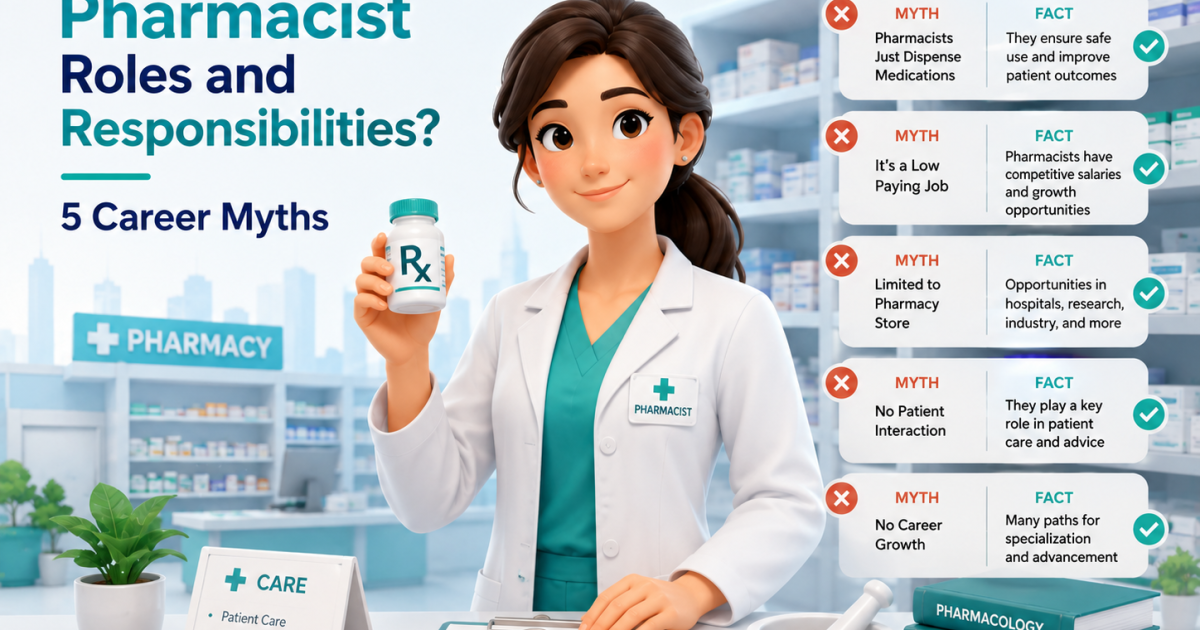
Myth 1: Pharmacists Just Count Pills All Day
This is probably the oldest stereotype in the book, and it hasn’t kept up with reality. Understanding pharmacist roles and responsibilities today means recognizing that dispensing medication is just one small piece of a much bigger job.
What They Actually Do Instead
A pharmacist’s day involves far more than filling bottles. They review prescriptions for safety, catch dangerous drug interactions before they reach a patient, counsel people on managing chronic conditions, and often coordinate directly with doctors on treatment plans.
Key tasks include:
- Reviewing prescriptions for accuracy and safety
- Flagging interactions between medications
- Advising physicians on dosage adjustments
- Educating patients on proper medication use
Myth 2: Pharmacists Don’t Need Direct Patient Interaction
Many people picture pharmacists working quietly behind a counter, rarely speaking to anyone. In truth, patient interaction sits at the center of the job, and it keeps growing as healthcare systems lean harder on pharmacists for accessible care.
The Growing Clinical Role of Pharmacists
Pharmacists now handle responsibilities once reserved for doctors and nurses. Many administer vaccines, run screenings for conditions like diabetes or high blood pressure, and manage medication therapy for patients with chronic illnesses.
This shift reflects how pharmacist roles and responsibilities have expanded well past the pharmacy counter.
Common clinical tasks include:
- Administering immunizations
- Conducting health screenings
- Managing chronic disease medication plans
- Offering guidance during consultations
Myth 3: A Pharmacy Degree Limits You to Retail Work
Retail pharmacy is one path among many, not the only one. A Doctor of Pharmacy degree opens doors across healthcare, research, and business, giving graduates far more flexibility than most people assume when picking this career.
Career Paths Beyond the Counter
Pharmacy graduates work in hospitals managing complex medication regimens for critically ill patients, in clinical settings supporting specialized treatment teams, in pharmaceutical companies developing new drugs, and in academia training the next generation.
Career options include:
- Hospital and clinical pharmacy
- Pharmaceutical industry and drug development
- Academic research and teaching
- Regulatory affairs and consulting
Myth 4: Pharmacists Can’t Prescribe or Make Clinical Decisions
This myth is losing ground fast. Depending on location, pharmacists now hold real prescriptive authority and make independent clinical calls, particularly for routine medications, vaccinations, and certain chronic condition management programs.
Expanding Prescriptive Authority by Region
Rules vary by state and country, but the trend points in one direction: more authority for pharmacists. Some regions allow them to prescribe birth control, adjust dosages independently, or manage ongoing therapy without waiting on a physician’s sign-off each time. Examples include:
- Prescribing certain contraceptives directly
- Adjusting medication dosages under collaborative agreements
- Independently managing vaccination programs
- Initiating treatment for minor ailments
Myth 5: Technology Will Replace Pharmacists
Automation handles counting and packaging in many pharmacies today, but that hasn’t made pharmacists obsolete. If anything, technology has freed them up to spend more time on the clinical work that actually requires human judgment.
Why Human Judgment Still Matters in Pharmacy
Software can flag a drug interaction, but it can’t sit with a worried patient and explain what a new diagnosis means for their daily life. Machines don’t build trust, ask the right follow-up questions, or catch the subtle signs of a patient in distress.
What technology can’t replace:
- Personalized patient counseling
- Judgment calls on ambiguous cases
- Building long-term patient relationships
- Emotional support during health scares
Conclusion:
The pharmacist behind the counter today is doing far more than the stereotype suggests.
From catching dangerous drug interactions to administering vaccines, managing chronic disease programs, and stepping into research, industry, and academic roles, pharmacist roles and responsibilities have grown well beyond outdated assumptions.
The five myths covered here don’t hold up against how the profession actually works in 2026, and pharmacists deserve recognition for the clinical judgment and patient care they bring every day.
If you’re a pharmacist looking to move into a hospital, clinic, or specialized role that reflects this broader scope of work, Staffton Health connects healthcare professionals with employers who value that expertise.
Whether you’re exploring a shift from retail into clinical practice or searching for your next opportunity, browse open pharmacist roles on Staffton Health and find a position that matches where your career is headed.
FAQs
1. Mainly, what are the pharmacist roles and responsibilities today?
Beyond dispensing medication, pharmacists review prescriptions for safety, counsel patients on proper drug use, administer immunizations, run basic health screenings, and often collaborate directly with physicians on treatment plans.
2. How does Staffton Health help pharmacists find better job opportunities?
Staffton Health connects licensed pharmacists with hospitals and healthcare employers actively hiring for clinical, hospital, and specialized roles, making it easier to move beyond retail positions into settings that match a candidate’s experience and goals.
3. Do pharmacists need a license to practice?
Yes. Every pharmacist must hold a Doctor of Pharmacy degree and pass state licensing exams before practicing, regardless of whether they work in retail, hospital, or clinical settings.
4. Can pharmacists prescribe medication?
In many regions, pharmacists now have limited prescriptive authority, particularly for vaccinations, birth control, and dosage adjustments under collaborative agreements with physicians. This authority varies by state and country.
5. Is Staffton Health only for hospital jobs, or does it list other pharmacist roles too?
Staffton Health lists a range of pharmacist openings across hospitals, clinics, and other healthcare settings, so candidates can compare opportunities based on role type, location, and career stage rather than being limited to one kind of employer.