

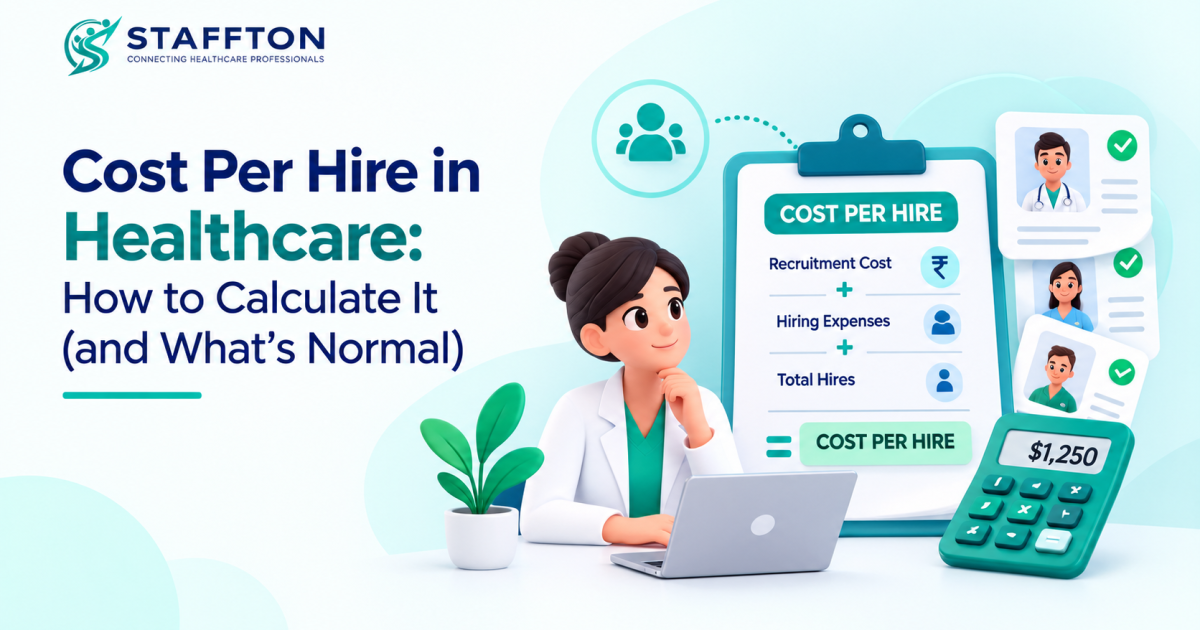
Recruitment cost is the number most Indian hospitals never work out in full. Ad bills and agency invoices are easy to see. Overtime, float staff, induction hours, and closed beds sit in other budgets, so they never get added to the hiring bill.
The gap is large. The 2026 NSI National Health Care Retention & RN Staffing Report found that replacing one bedside nurse costs a US hospital $60,090 on average. Indian pay is lower, but the same cost lines exist in every hospital here.
This guide covers the hiring cost calculation formula, every line item worth counting, and it also explains how to judge what is normal for your hospital.
What Does Recruitment Cost Include in a Hospital?
Recruitment cost per hire is the full money and staff time spent to fill one post. It starts when the vacancy opens and ends when the new hire works independently.
It has three buckets:
- External costs: money paid to outside parties, like agencies and job portals.
- Internal costs: the time of your own HR and clinical staff.
- Hidden costs: costs that land on wards, duty rosters, and hospital income.
Most hospitals stop after the first two buckets. That is why their reported number looks small.
Hiring Cost Calculation Formula
Pick one period, either a quarter or a year. Use the same inputs for every department and location.
Cost per hire = (External + Internal + Hidden costs) ÷ Number of hires
Two more formulas complete the picture.
Cost of vacancy = (Overtime per day + Agency premium per day + Lost bed income per day) × Days the post stays open
Repeat cost of early exits = Hires who left within 6 months × Full cost per hire
The third formula matters because a hire who leaves early sends the hospital back to square one, and the whole cost is paid twice.
External Costs to Count
1. Agency and Consultant Fees
Agencies usually charge a share of the hire’s annual salary. Multiply the fee percentage in your contract by the annual pay of each agency hire. Do not average it across all hires, because only some posts go through agencies.
2. Job Portals, Ads, and Social Campaigns
Add paid listings, boosted posts, and social media ads. Include subscription fees even if the plan covers many roles.
3. Verification and Registration Checks
Professional registration checks, past employer references, ID checks, and medical fitness tests all cost money. Each hire needs them, so count them per hire.
4. Referral and Joining Bonuses
Staff referral rewards and joining bonuses belong in the total. Many hospitals pay them from the HR budget and forget to add them to the hiring cost.
Internal Costs to Count
1. HR and Recruiter Time
Estimate the share of each recruiter’s salary spent on sourcing, calls, and paperwork. If one recruiter spends half the month on hiring, half the salary goes into this bucket.
2. Interview Time of Clinical Heads
A nursing superintendent or department head in an interview is not treating patients or running the unit. Count interview hours and multiply by their hourly pay.
3. Software and Tools
Applicant tracking software, assessment tests, and video interview tools all count. Divide the yearly fee across the hires made in that year.
Hidden Costs Most Indian Hospitals Skip
1. Overtime Backfill
When a post is empty, colleagues cover it on extra duty. Track overtime hours tied to open posts only. Fatigue also pushes more staff toward resigning, which adds new vacancies.
2. Agency Float
Float staff from temporary staffing fill the gap fast, but they cost more per day than a permanent salary. Count only the extra amount over the salary saved on the empty post.
3. Induction and Time to Productivity
A new nurse or technician needs weeks to reach full speed. Count preceptor hours, training, uniform, ID, and system access. The longer the ramp-up, the longer the hospital pays for output it is not yet getting.
4. Cost of an Unfilled ICU Bed
An ICU bed cannot open without trained nurses. A closed bed means lost admissions. Use contribution per bed-day (income minus direct variable cost), and ask finance for this number.
5. Early Exits
Track resignations within the first six months. Each one repeats the full cost, so early attrition is often the largest hidden drain on the hiring budget.
What Is a Normal Recruitment Cost Per Hire?
India has no widely published benchmark for hospital hiring cost. US figures do not carry over, because pay, agency fees, and hiring speed all differ. A single number copied from a foreign blog can mislead your budget.
The role group sets the cost level more than anything else:
| Role group | Relative cost | Why |
| Ward attendants and support staff | Low | Large pool, short search |
| Ward nurses and general technicians | Medium | Steady demand, moderate vacancy days |
| ICU, OT, and dialysis nurses and technicians | High | Scarce skills, long vacancies, bed income at risk |
| Specialist doctors | Highest | Long search, high agency fees, notice periods |
Build your own baseline in three steps. Compare each role against its own past quarters. Compare channels, meaning referral, portal, agency, and walk-in. Compare cities, since metro and tier-2 markets behave differently. If your figure leaves out hidden costs, it is too low.
HR Cost Metrics Hospitals Should Track Together
- Time to fill (days from vacancy to joining)
- Vacancy days per role
- Offer acceptance rate
- Early attrition within six months
- Overtime hours tied to open posts
- Cost per hire by role and channel
How Staffton Health Helps Hospitals Control Hiring Cost
Staffton Health connects hospitals with verified nurses, doctors, and allied health professionals. Verified profiles and faster shortlists can shorten the gap between vacancy and joining date, which is where most hidden costs build up.
FAQs
What is cost per hire in healthcare?
It is the total spend to fill one position. It includes job ads, agency fees, recruiter time, induction, overtime cover, and income lost from closed beds.
How do you calculate hospital recruitment cost per hire?
Add external, internal, and hidden costs for one period. Divide the total by the number of hires in the same period.
What is the cost of vacancy in a hospital?
It is the daily cost of an empty post. It covers overtime, agency premium, and lost income from any closed bed. Multiply it by the days the post stays open.
What is a good cost per hire for a hospital?
No single figure fits every hospital. A good number includes hidden costs and falls over time for each role group.
Which HR cost metrics should hospitals track?
Track cost per hire, time to fill, vacancy days, offer acceptance rate, early attrition, and overtime tied to open posts.
Conclusion
Recruitment cost is much higher than the invoices show. Overtime, float staff, induction time, and closed ICU beds often make up most of the bill.
Start with the formula, use your own hospital’s numbers, and track cost per hire by role every quarter. Then work on the biggest line, which in most hospitals is the number of days a post stays empty.